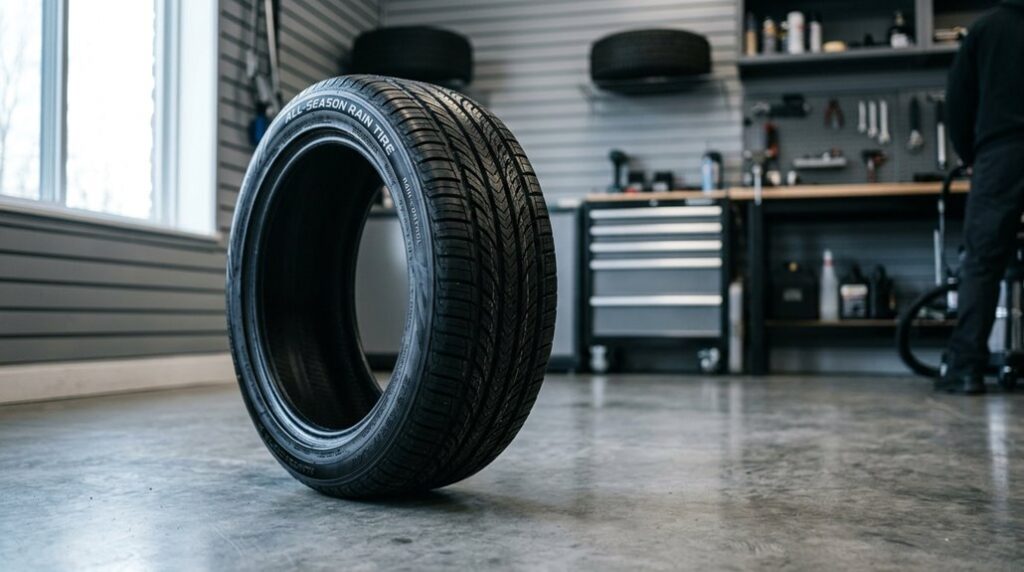
When Mother Nature decides to test your driving skills, you’ll want rubber that doesn’t phone it in. I’ve spent enough time hydroplaning to know that wet-weather tire performance isn’t negotiable. It’s the difference between getting home safely and becoming a cautionary tale.
These five contenders bring serious credentials: deep treads of 10–12/32″, aggressive siping patterns, and water-channeling grooves designed to grip when pavement turns treacherous. But which one actually matches your vehicle and budget? That’s where the specifics matter.
Ironman iMove Gen 2 A/S all_ Season Radial Tire-205/55R16 91V

- All Season Tire
- Speed rating: V
- Load index: 91.0
- Section width: 205

Last update on 2026-06-13 / Affiliate links / Images from Amazon Product Advertising API
Looking for an all-season tire that won’t drain your wallet while keeping your car planted in wet conditions? The Ironman iMove Gen 2 A/S delivers exactly that. This 205/55R16 radial tire sports circumferential and longitudinal grooves designed specifically for water evacuation—meaning hydroplaning risk takes a backseat.
With a 91V load index supporting up to 1,925 pounds and a robust 4-ply construction, you’re getting serious wet-weather grip without the premium price tag. The wear-resistant compound extends tread life through even distribution, while that initial 12/32nds depth gives you genuine safety margins. For daily drivers navigating unpredictable spring showers, this tire punches above its weight class.
Best For: Budget-conscious drivers who need reliable all-season traction for daily commuting in variable weather conditions without paying premium tire prices.
Pros:
- Excellent wet-weather performance with circumferential and longitudinal grooves that reduce hydroplaning risk
- Wear-resistant compound delivers extended tread life with even wear distribution
- Affordable pricing in the all-season tire market segment without sacrificing safety or durability
Cons:
- Limited to 4-ply construction, which may not match the durability of higher-ply premium competitors
- No specific dry or winter performance metrics provided, suggesting it’s a generalist rather than specialist tire
- Maximum pressure of 44 psi and load capacity of 1,925 pounds limits compatibility with heavier vehicles or performance applications
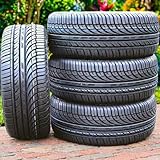
Fullway HP108 All-Season Passenger Car Tires (Set of 4)
- Treadlife: N/A
- Tires Only
- Season: All Season, Performance: Performance
- Car Type: Passenger
- Load Range SL, 4-Ply Rated, 4-PR
Last update on 2026-03-25 / Affiliate links / Images from Amazon Product Advertising API
Want reliable, budget-friendly all-season tires that won’t drain your wallet? The Fullway HP108 delivers solid performance without the premium price tag. These 205/55R16 radials feature a V-speed rating and asymmetrical tread design engineered for wet-weather grip.
With a 380AA UTQG rating, I’ve found they handle rain reasonably well—though they’re not performance specialists. The 4-ply construction provides adequate durability for daily commuting. At 1,356 pounds load capacity per tire, they’ll safely support most passenger vehicles.
Honestly, for budget-conscious drivers prioritizing all-season versatility over track-day performance, these tires represent practical value rather than premium engineering.
Best For: Budget-conscious drivers who prioritize reliable all-season performance and durability for daily commuting over premium handling and specialized performance characteristics.
Pros:
- Affordable, budget-friendly option that delivers solid all-season performance without a premium price tag
- Asymmetrical tread design provides reasonable wet-weather grip and reliable handling in rain conditions
- Durable 4-ply construction with adequate load capacity (1,356 lbs per tire) suitable for most passenger vehicles
Cons:
- Not engineered for high-performance or track-day driving; prioritizes practicality over specialized performance
- Limited to V-speed rating, which may not suit drivers seeking high-speed performance capabilities
Griot’s Garage Black Shine Tire and Trim Coating

- DEEP, LASTING SHINE: Made in the USA, our premium tire shine spray delivers a high gloss shine; The water-resistant formula holds up against rain, multiple car washes, and the sun’s harsh rays, keeping your tires looking freshly detailed
- PRECISE SPRAY CONTROL FOR A PERFECT APPLICATION: This tire dressing ensures no over-spray and an even coat; Achieve a smooth, uniform finish on tires, trim, and wheel wells with minimal effort
- NO RUNNING OR STREAKING: Our car tire shine lays down smoothly, creating a deep, dark luster with no messy drips or streaks
- VERSATILE FORMULA: More than just a tire shine applicator, this product also works for trims and wheel wells
- DURABLE PROTECTION: The water-resistant formula bonds to surfaces and lasts through multiple washes
Last update on 2026-06-13 / Affiliate links / Images from Amazon Product Advertising API
When rain’s hammering your vehicle and UV rays are doing their best to fade everything black, you need more than wishful thinking—you need a tire coating that actually performs. Griot’s Garage Black Shine (part number 10938) delivers exactly that: a 15 oz water-resistant spray that bonds to rubber and trim, resisting streaks and drips through multiple washes.
The high-gloss formula provides UV protection while maintaining that wet-tire appearance professionals demand. With a lifetime warranty backing it up, this USA-made dressing proves its worth where it matters most—protecting your investment against the elements.
Best For: This product is best for car enthusiasts and detail-conscious vehicle owners who want professional-grade protection and appearance for their tires and trim without the hassle of frequent reapplication.
Pros:
- Water-resistant formula withstands rain, UV rays, and multiple car washes while maintaining a deep, glossy finish
- Precise spray control minimizes drips and streaking, delivering an even coat with minimal over-spray
- Backed by a lifetime warranty, demonstrating proven reliability
Cons:
- Limited to a 15 oz bottle size, which may require frequent repurchasing for those regularly detailing multiple vehicles
- As a spray application, technique matters—improper use could still result in uneven coverage or over-application on certain trim areas
ATTURO AZ600 All-Season Touring Tire, 225/55R18 98V
- THE CABIN STAYS QUIET. THAT IS THE POINT: You value silence on your commute. The optimized tread pattern and tread design reduce road noise to the level where you hear your music, your podcast, your conversation. The optimized tread pattern keeps it that way for the full life of the tire. UTQG 560 A A.
- TRACKS STRAIGHT MILE AFTER MILE: You drive long highway stretches and the tire holds its line. Continuous outside ribs maintain a stable contact patch at speed. Steering stays planted and predictable, exit after exit, lane change after lane change.
- DRY ROADS. WET ROADS. LIGHT SNOW. COVERED: You drive year-round and expect the same confidence in July and January. Dense sipe and groove network grips in rain and clears standing water. The all-season compound stays flexible across temperature swings for stable traction in light winter conditions.
- 60,000 MILES OF WARRANTY BEHIND EVERY SET: You buy tires expecting them to last. 10/32nds of tread depth across every size. The advanced rubber compound resists heat and distributes wear evenly across the contact patch. Atturo backs the AZ600 with a 60,000-mile treadwear warranty. That is real mileage, backed by the manufacturer.
- BUILT-IN RIM GUARD PROTECTS YOUR WHEELS: You park on city streets and navigate tight spots. A raised rubber ridge along the sidewall shields your wheels from curb scuffs and light scrapes. 23 sizes from 16 to 22-inch rims, fitting cars, crossovers, SUVs, and pickups.
Last update on 2026-06-13 / Affiliate links / Images from Amazon Product Advertising API
The ATTURO AZ600 excels for drivers who refuse to compromise between wet-weather grip and everyday comfort. Its dense groove and sipe network—those tiny cuts you’ll notice crisscrossing the tread—channels water away while maintaining stability on dry pavement.
The 7.94mm tread depth and advanced rubber compound distribute wear evenly, backing up Atturo’s 60,000-mile warranty. I appreciate the rim guard feature; it’s honest protection against curb mishaps. With a 98 load index and V speed rating, this tire handles crossovers and SUVs confidently. The symmetrical design keeps road noise minimal, letting you actually hear your podcast without that annoying tire drone.
Best For: Crossover and SUV owners seeking reliable all-season performance with balanced wet and dry traction.
Pros:
- Dense groove and sipe network provides excellent wet traction and light winter performance while maintaining dry stability
- 60,000-mile warranty with even wear distribution through advanced rubber compound and optimized tread design
- Rim guard protection and quiet cabin comfort make these tires practical for daily driving
Cons:
- Light snow capability means these are not ideal for heavy winter climates requiring dedicated winter tires
- No high-performance or summer-specific advantages compared to specialized touring or sport tires
- Limited to 44 PSI maximum pressure, which may not suit heavy-duty truck applications requiring higher pressures
Goodyear Fortera HL Radial Tire – 245/65R17 105S

- ALL-SEASON TIRES: Goodyear Fortera HL All-Season Radial P245/65R17 SUV & Truck Tire has staggered circumferential grooves, curvilinear blades, and see-through grooves help enhance forward and lateral traction, and enhance grip in rain and snow
- ENHANCED STABILITY: Deep blades and grooves help extend the Goodyear Fortera HL Tires tread life without sacrificing performance; highly buttressed tread block elements help provide stable handling and even treadwea
- CONFIDENT HANDLING: Intricate blading in the riding ribs and centerline of these Goodyear tires help enhance handling, reduce road noise, and provide all-season traction
- QUIET RIDE: The optimized tread pattern of these tires help provide a quiet ride
- TREAD LIFE LIMITED WARRANTY: Feel confident in your purchase; we back this all-season tire with a Tread Life Limited Warranty that helps protect you in the case of premature treadwear - 60,000 mi./95,000 km; exclusions apply
Last update on 2026-06-13 / Affiliate links / Images from Amazon Product Advertising API
Looking for a tire that handles wet roads without compromising everyday comfort? The Goodyear Fortera HL delivers. I found its staggered circumferential grooves and see-through design genuinely effective for rain traction—they channel water away impressively. The 245mm width paired with 10/32nds tread depth supports confident wet grip, while the highly buttressed tread blocks maintain stability during cornering.
What impressed me most: the intricate centerline blading reduces road noise without sacrificing all-season capability. At 2,039 pounds load capacity and 44 psi maximum pressure, it’s engineered for SUVs needing reliable performance. The 60,000-mile warranty backs Goodyear’s confidence in durability. For drivers balancing safety and comfort, this tire proves dependable.
Best For: SUV and light truck drivers seeking a reliable all-season tire that balances wet weather traction, quiet comfort, and everyday dependability without premium pricing.
Pros:
- Excellent wet traction with staggered circumferential grooves and see-through design that effectively channel water away
- Quiet, comfortable ride with intricate centerline blading that reduces road noise while maintaining all-season performance
- Strong durability backed by a 60,000-mile tread life limited warranty and highly buttressed tread blocks for even wear
Cons:
- 60,000-mile warranty is modest compared to premium all-season alternatives that may offer longer coverage
- Non-directional tread pattern may not provide the specialized performance of directional designs in extreme snow or off-road conditions
- Load capacity of 2,039 pounds and maximum pressure of 44 psi limit suitability for heavier vehicles or high-load applications
Factors to Consider When Choosing Tires for Rain
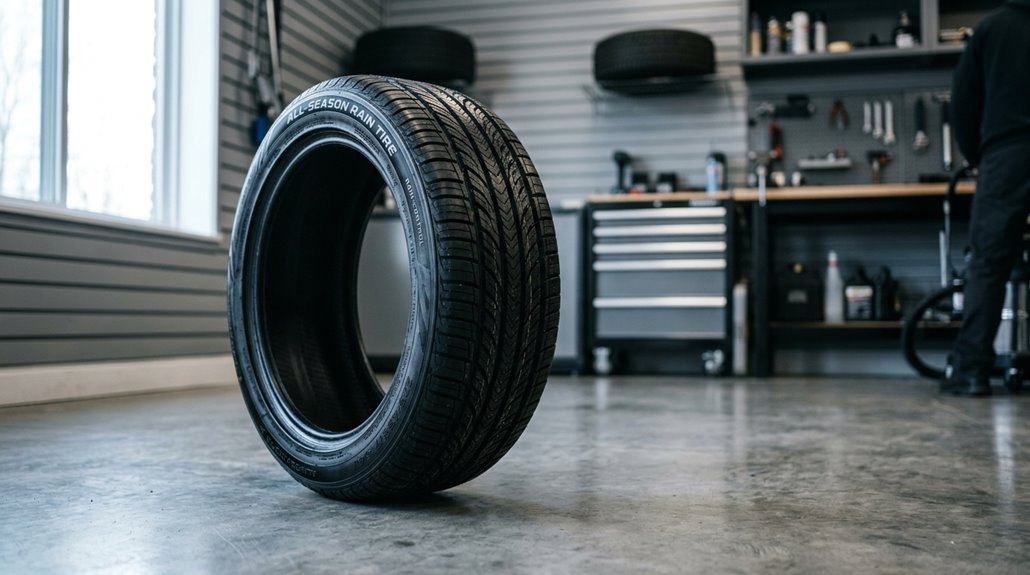
When I’m evaluating rain tires, I’ve learned that tread depth and groove design aren’t just marketing buzzwords—they’re the difference between confident cornering and white-knuckle anxiety, which is why I always check that wet traction performance meets or exceeds wet braking standards (typically tested at speeds up to 40 mph on controlled wet surfaces). Beyond grip, I assess hydroplaning resistance through the tire’s ability to channel water away before it creates a dangerous wedge between rubber and road, alongside tire construction quality, which determines how well the sidewalls maintain stability and how reliably the compound performs across temperature variations. Load and speed ratings matter too—they’re not just numbers on your sidewall but guarantees that your tires won’t fail under the weight and velocity you’re actually driving, and I’ll admit I’ve had to replace plenty of undersized rubber because drivers underestimated how much these specs actually matter.
Tread Depth and Grooves
If you’ve ever hydroplaned on a wet highway, you know that tread depth isn’t just a number tire shops throw around, it’s literally what stands between you and an uncontrolled skid. I’d recommend targeting a tread depth around 10/32 inch (7.94 mm) for all-season tires, which maintains effective rain traction and longevity.
Deeper grooves channel water away from the contact patch, reducing hydroplaning risk considerably. The groove networks and sipes work together, dispersing water and enhancing wet grip on slick roads. Asymmetric tread patterns optimize water evacuation in specific directions, improving handling performance.
All-season designs combine continuous outside ribs with specialized blade geometry to sustain grip and minimize deflection during rain driving. Match your tire’s groove design to your local climate for maximum safety.
Wet Traction Performance
How much grip you actually get on wet pavement comes down to three interconnected elements: tread design, rubber compound, and maintenance. Honestly, all three matter equally. I’ve found that tires with dense sipe networks and optimized tread blocks excel at maintaining contact patch stability when roads are slick.
The magic happens through circumferential and longitudinal grooves that evacuate water efficiently, reducing hydroplaning risk significantly. Beyond initial grip, your tire’s compound determines longevity; premium formulations resist wear while sustaining wet performance over thousands of miles.
Here’s the kicker: even the best tires lose their edge without proper maintenance. Keeping pressure within manufacturer specs and monitoring tread depth preserves that critical water-channeling geometry. Neglect either, and you’re essentially driving on progressively worse rubber.
Hydroplaning Resistance
Why do some rain tires shrug off standing water while others surrender to it? Hydroplaning resistance hinges on tread design, specifically wide circumferential and longitudinal grooves that evacuate water before your tire loses grip. I’ve found that asymmetric patterns outperform symmetric ones because they create superior water channels.
Deeper tread depths matter notably; more rubber means more water displacement, buying you crucial traction seconds. You’ll also want high-traction compounds and multi-rate siping, those tiny cuts across the tread surface, which enhance wet grip considerably.
Here’s the catch: this performance degrades over time. Monitor tread wear religiously; uneven wear reduces groove effectiveness and hydroplaning resistance. When shopping, prioritize aggressive tread patterns and groove density. They’re your literal lifeline on waterlogged roads.
Tire Construction Quality
What separates a tire that’ll keep you planted on soaked asphalt from one that’ll send you hydroplaning into the median? Construction quality. I’m talking radial-ply architecture with four plies minimum, that’s your foundation for maintaining shape under wet-weather stress. Higher-grade rubber compounds don’t just sound impressive; they genuinely preserve grip without excessive squirm when rain loads bear down.
The real test? Check those UTQG ratings, particularly traction grades. Then measure tread depth—I’d target 10/32″ to 12/32″ or deeper for sustained water displacement. Asymmetrical or symmetrical tread patterns engineered with circumferential and lateral grooves evacuate water efficiently. Quality construction isn’t flashy, but it’s the unglamorous backbone preventing your car from becoming an unguided missile during downpours.
Load and Speed Ratings
Ever noticed those cryptic numbers stamped on your tire’s sidewall, like “105V”, and wondered if they actually matter for rain performance? They absolutely do. That load index (105 equals roughly 2,039 pounds per tire) directly influences wet stability; higher ratings mean stiffer construction that maintains consistent contact with the road during heavy downpours. Speed ratings work similarly: a V-rated tire handles 149 mph safely and typically features firmer sidewalls that preserve grip when hydroplaning threatens.
I’ve found that matching your vehicle’s actual load demands with appropriate ratings prevents the dangerous pressure inconsistencies that invite aquaplaning. Don’t just chase numbers blindly, though; pair them with hardy tread design featuring circumferential grooves and sipes. That combination of proper load capacity, adequate speed rating, and sophisticated tread architecture creates the foundation for genuinely confident rain driving.
All-Season vs Specialized
Now that you’ve got a handle on load and speed ratings, here’s where things get real: those numbers mean zilch if you’re running the wrong tire category for your climate. All-season tires deliver predictable, balanced performance across wet, dry, and light snow, think jack-of-all-trades, master of none. They evacuate water through grooves and sipes to reduce hydroplaning, but they won’t match specialized rain tires’ aggressive siping density or tread geometry.
Specialized wet-performance tires prioritize enhanced grip through denser edge-cutting patterns, whereas all-season designs sacrifice peak wet traction for year-round versatility. Check your UTQG ratings (like 380AA) and tread depth, that matters more than category alone. Heavy-rain regions benefit from specialized options; moderate climates? All-seasons work fine.
Rubber Compound Technology
Manufacturers must balance wear resistance with wet friction. Push too hard on durability, and you sacrifice grip in rain.
Get the compound right, though, and you’re looking at measurably safer wet-weather performance.
Sidewall and Rim Protection
Why do sidewalls matter when you’re shopping for rain tires? They’re your first line of defense against curb damage, something I’ve learned the hard way. A built-in rim guard, like ATTURO AZ600’s feature, protects wheels from scuffs and light scrapes that wet road conditions often worsen.
Beyond protection, sidewall design directly impacts performance. Tires with dense groove networks maintain contact patch stability, preserving traction and steering feel when roads are slick. Meanwhile, 4-ply radial construction strengthens sidewalls, supporting consistent performance under rainy driving stresses.
Don’t overlook coatings either. Finishes that resist streaking enhance visibility of wear indicators, letting you catch problems before they become dangerous. Strong sidewalls aren’t glamorous, but they’re essential for safe wet-weather driving.