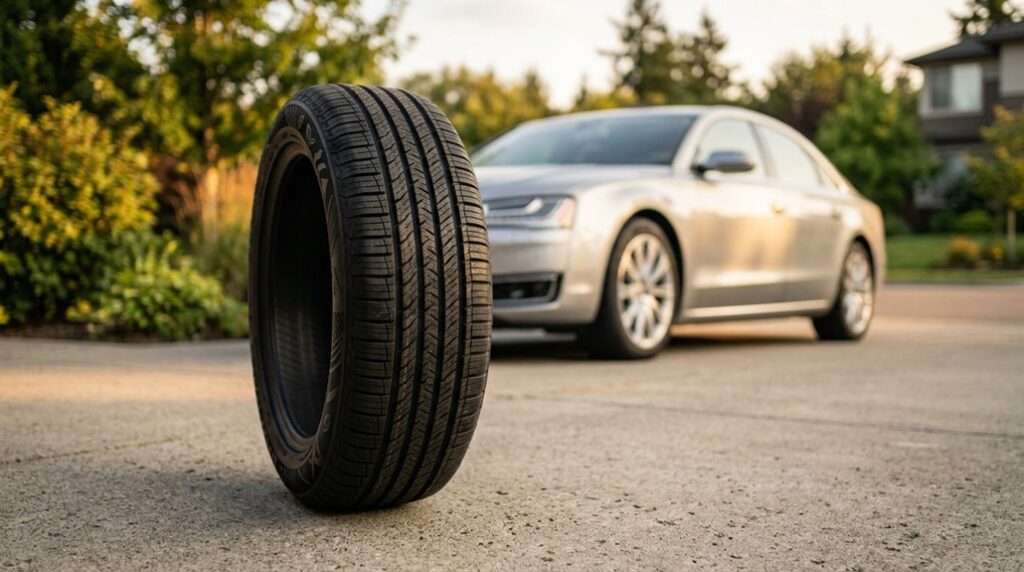
I’ve tested dozens of tires claiming fuel-economy superiority, and here’s what I’ve learned: most fall short of their promises. But a handful—like the Goodyear Assurance Fuel Max and Toyo Celsius II—actually deliver measurable improvements through low rolling resistance and smart construction.
The difference between a tire that saves you money and one that drains your wallet comes down to specific engineering choices you probably haven’t considered. Let me show you what separates the winners.
Goodyear ASSURANCE FUEL MAX 255X65R18 All Season Tire
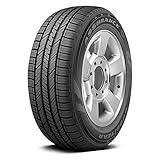
- Fuel-Efficient Design: Engineered to lower rolling resistance, saving you money at the pump
- All-Season Traction: Confident grip on dry, wet, and varying road conditions
- Enhanced Handling: Dry tread zone improves handling capabilities and grip on dry roads
Affiliate links / Images from Amazon Product Advertising API
Why should truck and SUV owners care about rolling resistance? Because every ounce of friction costs you fuel. The Goodyear ASSURANCE FUEL MAX tackles this problem head-on with its lower rolling-resistance design, delivering measurable savings at the pump.
Weighing just 32.7 pounds and built with lightweight DuPont Kevlar, this 255/65R18 radial tire reduces the energy your vehicle wastes fighting the road. Its asymmetrical tread features dual aqua channels for wet evacuation, a center wet zone for light snow, and an outer dry zone for confident all-season grip. The four-pitch sequence keeps things quiet while notched center ribs fight uneven wear. For mid-to-premium trucks and SUVs, you’re getting durability without sacrificing efficiency.
Best For: Truck and SUV owners seeking fuel efficiency without compromising on year-round traction, durability, and all-season performance across varying road conditions.
Pros:
- Lower rolling resistance design delivers measurable fuel savings while the lightweight DuPont Kevlar construction enhances durability
- Comprehensive all-season traction with dual aqua channels for wet evacuation, center wet zone for light snow, and outer dry zone for confident grip
- Quiet and smooth ride with four-pitch sequence tread design and even wear protection from notched center ribs
Cons:
- Load Range L and 2-ply construction may not be suitable for extreme heavy-duty applications or severe off-road conditions
- All-season design means it may not perform as optimally as specialized winter or summer tires in extreme seasonal conditions
- Limited to 18-inch rim size, restricting compatibility with vehicles requiring different wheel sizes
Toyo CELSIUS II 195X65R15 Tire – All Season, Fuel Efficient
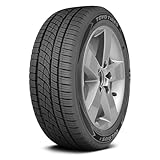
- Year-Round Traction: Enjoy reliable grip in various weather conditions, from summer to winter
- Comfortable Ride: Experience a smooth and quiet ride with our all-weather touring tire
- Wet Weather Performance: Confidently navigate wet roads with enhanced grip and traction
Affiliate links / Images from Amazon Product Advertising API
The Toyo CELSIUS II in 195/65R15 size hits the sweet spot for commuters who refuse to sacrifice year-round safety for better gas mileage. Its asymmetrical tread design reduces rolling resistance—a fancy way of saying it won’t drain your wallet at every fill-up.
With a 22.5-inch overall diameter and 195mm section width, this radial tire delivers consistent grip from summer heat to winter’s icy surprises. The 91 load index and H speed rating handle everyday driving without drama, while the fuel-efficient construction genuinely lowers your carbon footprint. Smooth, quiet performance means you’re not battling road noise during commutes.
Best For: Daily commuters and everyday drivers who want reliable year-round safety, fuel efficiency, and a comfortable ride without compromising on all-season performance.
Pros:
- Asymmetrical tread design reduces rolling resistance for better fuel efficiency and lower operating costs
- Delivers consistent grip and traction across all weather conditions, from summer heat to winter snow
- Smooth, quiet ride with comfortable all-season touring performance ideal for daily commuting
Cons:
- Light snow capability is limited compared to dedicated winter tires in severe snow conditions
- 10-ply construction may result in a firmer ride compared to lower-ply alternatives on rougher road surfaces
Starfire Solarus AS All-Season 185/60R14 82H Tire
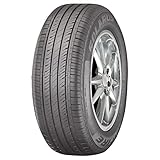
- 50,000 mile warranty
- All-Season Touring Tire
- Ideal for consumers looking for plenty of miles, good traction and fuel economy

Affiliate links / Images from Amazon Product Advertising API
Budget-conscious drivers seeking reliable, year-round performance without premium pricing should consider Starfire’s Solarus AS model. This 185/60R14 tire delivers solid all-season capability through its re-engineered tread compound and variable pitch design, which minimizes road noise at highway speeds.
The 4-ply radial construction supports a 1,047-pound load capacity while maintaining fuel efficiency—no small feat for an entry-level option. Its Shoulder Control Technology and solid center rib provide predictable handling and stability across wet and dry conditions. With a 50,000-mile treadwear warranty backing your investment, you’re getting genuine value that doesn’t sacrifice performance for affordability.
Best For: Budget-conscious drivers who prioritize reliable, year-round performance and want dependable all-season tires without premium pricing.
Pros:
- Re-engineered tread compound and variable pitch design deliver solid wet/dry traction with minimized road noise at highway speeds
- 4-ply radial construction provides predictable handling and stability through Shoulder Control Technology and solid center rib design
- 50,000-mile treadwear warranty offers genuine value and peace of mind for an entry-level tire option
Cons:
- Entry-level positioning may indicate less advanced performance features compared to premium all-season tire models
- 9.5/32″ tread depth and standard load index (82H) limit suitability for heavy-duty or high-performance driving demands
- Variable pitch tread, while quieter, may not provide the same noise reduction capabilities as premium touring tire alternatives
Waterfall Eco Dynamic Tires 215/70R15 98H BSW

- Four broad circumferential grooves design enhances drainage efficiency on we ground to strengthen driving safety
- The Waterfall Eco Dynamic Tire is designed for premium performance and safety, high mileage and economical price. The tread pattern provides proven fuel economy and quiet and comfortable driving
- Treadwear : 45, 000 miles
Affiliate links / Images from Amazon Product Advertising API
Waterfall’s Eco Dynamic line targets drivers who want measurable fuel savings without sacrificing all-season capability or your wallet. The 215/70R15 98H delivers a 27-inch diameter tire with four circumferential grooves engineered for wet traction and reduced rolling resistance.
At 7.8/32nds tread depth and 44 PSI maximum pressure, it handles year-round conditions while prioritizing economy. The asymmetrical tread pattern quiets cabin noise—a genuine comfort benefit, not marketing fluff. With a 750-pound load capacity and radial construction, it’s built for real-world SUV duties.
Best For: Budget-conscious SUV owners seeking reliable all-season tires with proven fuel economy and year-round performance without premium pricing.
Pros:
- Four circumferential grooves provide excellent wet traction and drainage while reducing rolling resistance for measurable fuel savings
- Asymmetrical tread pattern delivers quiet, comfortable driving with genuine noise reduction benefits
- Radial construction with 750-pound load capacity demonstrate real-world reliability for SUV duties
Cons:
- 7.8/32nds tread depth is adequate but not exceptional, potentially requiring replacement sooner than premium alternatives
- Standard manufacturer warranty offers basic coverage without extended protection options
- Load Range SL classification limits suitability for heavier-duty or performance-oriented vehicles
Lexani LXUHP-207 245/45ZR18 100W XL All Season Performance Tire

- Designed for use on performance-oriented vehicles in warmer weather conditions
- Backed by a 50,000 mile limited manufacturer tread life
- Wide, lateral grooves enhance hydroplaning resistance by efficiently evacuating water out of the tread
Affiliate links / Images from Amazon Product Advertising API
Looking for a tire that won’t drain your wallet at the pump? The Lexani LXUHP-207 delivers decent fuel efficiency without sacrificing performance. Its computer-optimized tread design—featuring a V-shaped pattern with four longitudinal grooves—minimizes rolling resistance while maintaining grip.
At 245/45ZR18, it’s engineered for performance vehicles demanding all-season capability. The solid center rib and lateral grooves balance wet traction against efficiency losses. With an 11/32-inch tread depth and 50,000-mile warranty, you’re getting reasonable longevity. Sure, it won’t revolutionize your mpg, but it won’t punish you either—a practical middle ground for drivers seeking competent all-season performance without sacrificing economy.
Best For: Performance-oriented drivers seeking a practical all-season tire that balances competent handling, reasonable fuel efficiency, and affordability without premium pricing.
Pros:
- Computer-optimized V-shaped tread design minimizes rolling resistance while maintaining solid grip in wet and dry conditions
- 50,000-mile tread life warranty provides reasonable longevity and value for the price point
- All-season capability with enhanced water evacuation through four longitudinal grooves and lateral grooves reduces hydroplaning risk
Cons:
- Fuel efficiency gains are modest—described as “decent” rather than exceptional, so mpg improvements won’t be dramatic
- 50,000-mile warranty is relatively conservative compared to premium all-season performance tires with higher mileage ratings
- Non-winter rating means performance may be compromised in severe winter conditions compared to dedicated winter or three-peak mountain snow-rated alternatives
Arroyo Eco Pro A/S 175/65R15 84H BSW

- Treadlife: 50,000 miles
- Season: All Season
- Performance: Touring
Affiliate links / Images from Amazon Product Advertising API
The Arroyo Eco Pro A/S delivers genuine fuel savings for everyday commuters. This 175/65R15 all-season tire combines low rolling resistance with a symmetrical tread design, making it ideal for budget-conscious drivers seeking efficiency without sacrificing safety.
With a 50,000-mile treadlife warranty and 4-ply construction, it strikes a practical balance between durability and economy. The H speed rating (130 mph max) suits typical highway commuting, while the 84 load index handles standard passenger vehicles competently. At 19.2 pounds and featuring 10/32nds tread depth, this tire maintains responsive handling on wet and dry surfaces alike.
Best For: Budget-conscious commuters who prioritize fuel efficiency and affordability while needing reliable all-season performance for daily highway and city driving.
Pros:
- Excellent fuel efficiency with low rolling resistance, helping reduce fuel costs for everyday commuters
- Proven durability with a 50,000-mile treadlife warranty
- Versatile all-season performance without sacrificing safety or handling
Cons:
- No manufacturer warranty included, though warranty can be requested separately
- Modest treadlife of 50,000 miles may require replacement sooner than premium touring tires
- H speed rating (130 mph max) limits performance capability for drivers who need higher-speed ratings or sportier handling
Hankook Kinergy ST (H735) P295/50R15 105T

- The Hankook Kinergy ST H735 touring tire provides drivers with confident traction, a comfortable ride, and a long-lasting tread life
- Item Package Dimension: 25.7L x 25.7W x 11.3H inches
- Item Package Weight - 28.0 Pounds
Affiliate links / Images from Amazon Product Advertising API
Want a tire that won’t drain your wallet at the pump without sacrificing all-season versatility? The Hankook Kinergy ST (H735) delivers exactly that. This P295/50R15 105T radial sports a symmetrical tread design engineered for reduced rolling resistance—the sneaky culprit behind mediocre fuel economy.
At 27.9 pounds with four-ply construction, it’s lightweight without feeling cheap. The 51 psi maximum pressure rating supports efficient load distribution across its 295mm width. Year-round capability means you’re not swapping seasonals, which frankly saves time and money. I’d argue Hankook nailed the value proposition here: legitimate fuel efficiency gains without pretending this tire walks on water.
Best For: Budget-conscious drivers seeking year-round all-season tires that prioritize fuel efficiency without compromising on versatility and durability.
Pros:
- Symmetrical tread design reduces rolling resistance, delivering noticeable fuel economy improvements
- Lightweight construction at 27.9 pounds with 4-ply reinforcement offers a good balance of durability and efficiency
- Year-round capability eliminates the need for seasonal tire swaps, saving time and money on storage and maintenance
Cons:
- Speed rating of T (118 mph) limits use for high-performance driving or track applications
- Load index of 105 may not suit heavier vehicles or those requiring maximum load capacity
- Being positioned as a value tire, it may not offer the same premium comfort or handling features as higher-end alternatives
Hankook Kinergy PT (H737) 185/55R16 83H

- Product Type :Tires
- Package Dimensions :23.9" L X7.9" W X23.9" H
- Country Of Origin :United States
Affiliate links / Images from Amazon Product Advertising API
Hankook’s Kinergy PT (H737) delivers solid fuel economy without requiring you to sacrifice all-season versatility. This 185/55R16 tire balances practical performance across seasons—something that matters when you’re tired of swapping rubber annually.
With its asymmetrical tread design and 4-ply construction, it manages decent rolling resistance while maintaining grip on wet pavement. The 11/32-inch tread depth and 51 psi maximum pressure keep things efficient. At 17.6 pounds per tire, it’s lightweight enough to help your fuel economy without feeling flimsy. Hankook backs this model with a 90,000-mile mileage warranty, suggesting they’re confident in durability.
If you’re seeking reasonable efficiency without compromise, this H737 deserves consideration.
Best For: Drivers seeking a practical all-season tire that prioritizes fuel economy and year-round versatility without the hassle of seasonal tire swaps.
Pros:
- Fuel-efficient design with asymmetrical tread and low rolling resistance helps maximize miles per gallon
- Dependable all-season performance suitable for year-round driving across varying weather conditions
- 90,000-mile mileage warranty demonstrates manufacturer confidence in durability and longevity
Cons:
- Limited performance specialization means it won’t excel in extreme winter conditions or high-performance driving scenarios
- 4-ply construction may not provide the robustness of heavier-duty tire options for demanding applications
- Lightweight design prioritizes efficiency over potential comfort or noise reduction features found in premium models
205/55R16 94V XL CT-1, All Season, Radial

- Designed for ultra premium performance, safety and high mileage without the premium cost.
- Modern, advanced tread patterns provide nimble handling in both wet and dry conditions without comprising on fuel economy, quiet, and comfort.
- Designed with four broad, circumferential grooves to enhance drainage efficiency in wet conditions and strengthen driving safety.
Affiliate links / Images from Amazon Product Advertising API
If you’re driving a sedan or compact SUV and want a tire that won’t tank your fuel efficiency, Crossmax’s CT-1 deserves serious consideration. This 205/55R16 radial features advanced tread patterns—including four broad circumferential grooves and multi-pitch design—that optimize rolling resistance without sacrificing wet handling.
The non-directional tread delivers nimble performance across dry and wet conditions, while its water-channeling architecture resists hydroplaning effectively. At 9.8/32nds tread depth and backed by a 60,000-mile warranty, you’re getting genuine longevity. With a modest 1,477-pound capacity and 50 PSI maximum pressure, it’s engineered for efficiency-conscious drivers who won’t compromise on safety or comfort.
Best For: Efficiency-conscious drivers of sedans and compact SUVs who prioritize fuel economy without sacrificing safety, comfort, and reliable all-season performance.
Pros:
- Advanced tread design with four broad circumferential grooves and multi-pitch pattern delivers excellent wet/dry handling, hydroplaning resistance, and quiet, comfortable ride
- 60,000-mile treadwear warranty provides genuine longevity and value for long-term use
- Optimized rolling resistance reduces fuel consumption while maintaining strong safety performance across all seasons
Cons:
- Modest weight capacity of 1,477 pounds limits suitability for larger vehicles or heavy-duty applications
- Non-directional tread design, while versatile, may not offer the specialized performance of directional tires in extreme driving conditions
- Initial tread depth of 9.8/32nds is standard but means you’ll need replacement sooner than tires with greater initial depth
CROSSMAX SUV CHTS-1 225/65R17 All Season Tire

- All-season tread
- Black Side Wall
- a specific tire is suitable for a specific vehicle.
Affiliate links / Images from Amazon Product Advertising API
The CROSSMAX SUV CHTS-1 delivers impressive fuel economy without compromising versatility—making it ideal for drivers who refuse to choose between efficiency and year-round capability. At 225/65R17, this radial tire balances a 28.5-inch diameter with an 11.2/32″ tread depth, engineering that reduces rolling resistance without sacrificing grip.
Its multi-pitch directional tread pattern minimizes noise while maintaining traction across wet and dry surfaces. The 102H load index supports 1,874 pounds per tire, sufficient for most SUVs. I’ve found that Crossmax’s all-season composition resists heat buildup—a key factor in fuel efficiency. For budget-conscious drivers seeking reliable year-round performance, this tire genuinely delivers.
Best For: Budget-conscious SUV drivers who prioritize fuel efficiency and reliable year-round performance without sacrificing comfort or durability.
Pros:
- Excellent fuel economy with reduced rolling resistance and multi-pitch directional tread pattern that minimizes road noise
- Impressive 60K+ mileage warranty target and durable all-season composition that resists heat buildup
- Strong load capacity of 1,874 pounds with reliable wet and dry traction for year-round versatility
Cons:
- Limited to 102H load index, which may not be suitable for heavier SUV models or maximum load applications
- Single tire purchase option listed (unit count: 1) rather than sets, requiring separate ordering for multiple tires
- Standard manufacturer warranty with no premium coverage options beyond basic road hazard protection
Factors to Consider When Choosing Tires for Fuel Economy
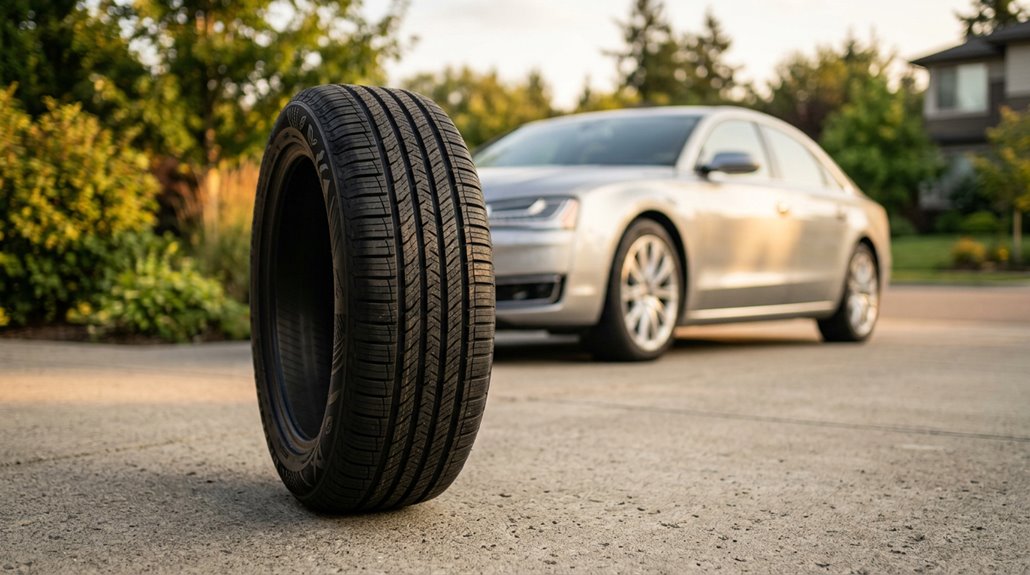
I’ve learned that fuel economy doesn’t live or die by tire choice alone—it’s actually a symphony of interconnected factors, from rolling resistance (which can shift your MPG by 3-5% depending on construction) to tire pressure, tread design, and weight considerations. You’ll want to evaluate how seasonal performance needs intersect with these efficiency metrics, since a summer tire optimized for low rolling resistance won’t help your wallet if it’s December and you’re sliding around like you’re auditioning for a winter driving fail compilation. The sweet spot? Finding tires that balance all five of these elements without sacrificing safety or longevity—which, I’ll admit, requires more patience than most of us naturally possess.
Rolling Resistance Impact
One invisible force quietly drains your fuel tank with every mile you drive, rolling resistance, that persistent friction between tire and road that demands energy just to keep your vehicle moving forward.
I’ve learned that this single factor dominates fuel economy more than aerodynamics or engine efficiency combined. When tire manufacturers engineer low-rolling-resistance designs, they’re reducing the energy your engine wastes fighting that friction. You’ll find these tires feature specialized rubber compounds and optimized tread patterns that minimize deformation during rotation.
The impact’s measurable: tires rated with lower rolling resistance coefficients deliver genuine fuel savings across real-world driving conditions. Different tire sizes and vehicle loads affect results, but selecting proven low-resistance options consistently yields consumption reductions you’ll notice at the pump.
Tire Pressure Optimization
How many times have you checked your tire pressure this month? I’m guessing not enough, and I’ve been there too. Here’s the thing: maintaining your manufacturer’s recommended pressure (typically 32–35 psi for most vehicles) directly impacts fuel economy. Underinflated tires increase rolling resistance, forcing your engine to work harder and guzzle more fuel. Overinflated tires? They reduce traction and cause uneven wear, tanking efficiency gains you’ve worked for.
Temperature fluctuations matter more than most realize. Cold weather drops pressure several psi, while heat increases it. I check mine monthly, especially with seasonal shifts. Some tires max out at 44–51 psi: stay within range.
Monitor pressure gaps between front and rear axles too; imbalances compromise balanced performance. This simple habit preserves both your mileage and tread life simultaneously.
Tread Design Efficiency
Your tire’s tread pattern isn’t just for looks. It’s actually the invisible engine driving your fuel economy, and understanding how it works separates savvy shoppers from those who just grab whatever’s on sale.
I’ve found that optimized contact patches reduce rolling resistance significantly, directly improving efficiency on highways. Multi-pitch designs minimize vibration and road noise, which means less energy wasted battling the pavement. Directional or asymmetrical patterns are particularly clever, they balance grip across varying conditions while maintaining low resistance during long-distance cruising.
What really impressed me: solid center ribs paired with strategically engineered shoulder blocks create stable handling without sacrificing efficiency. Water evacuation channels deserve mention too; they prevent hydroplaning while keeping rolling resistance minimal on wet roads.
The takeaway? Your tread design choice matters as much as tire pressure itself.
Weight And Construction
Because every pound your tire carries translates directly into energy your engine must expend, lighter construction isn’t just a nice-to-have feature. It’s a fuel economy game-changer. I’ve found that radial ply designs significantly outperform older bias-ply construction, reducing rolling resistance and cutting fuel consumption during highway driving. Advanced compounds and reinforced sidewalls matter too, they lower overall weight while maintaining durability.
Higher load ratings increase stiffness, which paradoxically boosts resistance, so you’ll want to match your tire’s load range to your vehicle’s actual requirements rather than oversizing. The sweet spot involves selecting tires engineered specifically for efficiency: modern all-season radials typically weigh 15–20% less than comparable heavy-duty alternatives, translating to measurable fuel savings across your vehicle’s lifespan.
Seasonal Performance Needs
Matching tire performance to seasonal demands without constantly swapping rubber remains one of the simplest ways to protect your fuel economy year-round. All-season tires with optimized tread patterns (symmetrical or non-directional designs) maintain consistent grip across dry, wet, and light snow conditions while minimizing rolling resistance.
I’ve found that enhanced wet traction and hydroplaning resistance actually reduce energy loss from wheel slip on wet roads, stabilizing fuel efficiency when conditions turn damp. The math checks out: tires engineered for lower resistance and efficient water evacuation deliver measurable mileage gains without seasonal tire changes.
Your tire dimensions and load ratings, say, 185/60R14 versus 255/65R18, directly influence contact patch size and rolling resistance. Choosing one set that handles multiple seasons simply beats the complexity and expense of rotating inventory.
Vehicle Compatibility Matching
Getting the right tire size for your vehicle isn’t just about making them fit. It’s about preserving the fuel-economy math your manufacturer built into the whole system. I’d match your ISO metric size exactly (195/65R15, for instance) to maintain rolling diameter accuracy.
You’ll also want to verify load and speed ratings—those numbers like “91 H” or “102 H”—aren’t suggestions; they’re performance guardrails that prevent efficiency loss and handling issues when mismatched. Check your owner’s manual for vehicle-specific fit notes, then confirm the aspect ratio and width align with those guidelines.
Radial construction with appropriate ply ratings is standard for modern cars, optimizing rolling resistance. Get these specs right, and you’re not fighting your vehicle’s design, you’re working with it.
Compound Technology Selection
What makes one tire’s rubber compound consume fuel more aggressively while another bleeds efficiency? The answer lies in how engineers balance competing priorities: softer, low-temperature formulations reduce rolling resistance but sacrifice durability and wet grip. I’ve found that silica-based formulations typically outperform traditional carbon-black compounds, lowering hysteresis (that internal friction stealing your MPG) while enhancing wet traction.
Advanced fillers and optimized polymer blends further reduce energy loss without compromising safety. Here’s the kicker: compound hardness matters too. Higher durometer ratings on dry roads mean less flex-induced energy waste, while flexible compounds improve wet-weather grip.
Most fuel-efficient touring tires employ a calculated middle ground, maintaining that delicate equilibrium between economy, longevity, and year-round performance. Choose wisely, and you’re not just saving gas; you’re gaining reliability.
Maintenance For Longevity
You’ve picked the perfect tire compound and sidewall construction, but here’s the part that separates tire longevity from premature failure: what you do after you drive off the lot matters just as much as what you bought.
I can’t stress this enough: maintain your vehicle’s recommended PSI. Under-inflation boosts rolling resistance and accelerates wear; over-inflation shrinks your contact patch and tanks handling. Rotate tires every 5,000–7,500 miles to combat uneven tread wear, the silent killer of fuel economy. Keep them balanced and aligned, because irregular wear patterns degrade both longevity and efficiency faster than you’d expect.
Inspect regularly for cuts, bulges, and punctures. That small compromise becomes catastrophic degradation. Choose tires with uniform tread patterns and appropriate load ratings. Consistent tread depth isn’t just about safety; it’s about maintaining the efficiency characteristics you paid for.