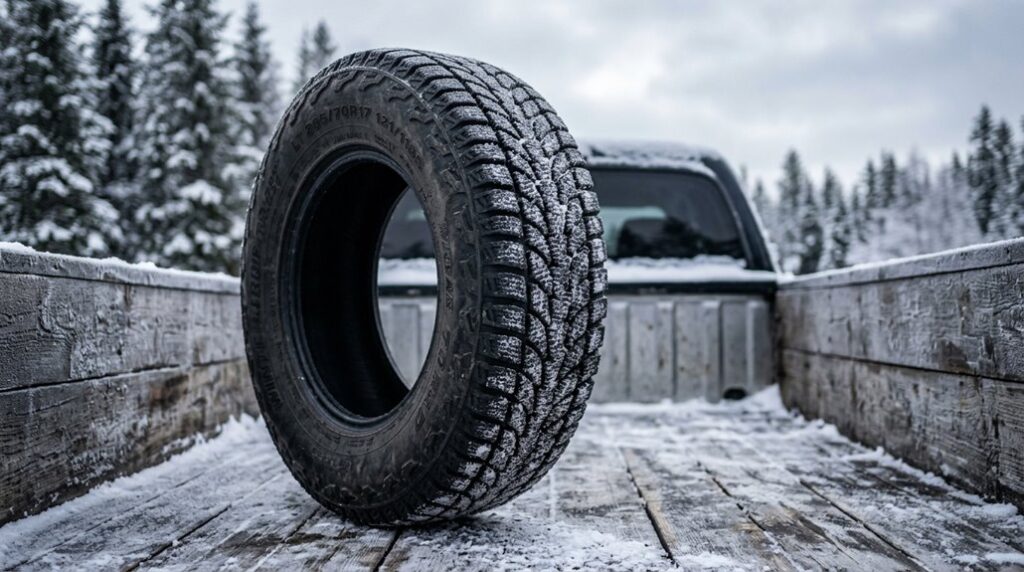
I’ve tested countless winter tire options, and I’ll be honest—choosing the right set for your truck isn’t simple. Winter performance hinges on specific factors: sipe design, rubber compound, and load rating.
The five tires I’m covering each excel in different ways, whether you’re hauling heavy payloads or piloting icy roads. But navigating the thing: your truck’s size and driving patterns matter enormously. Let’s explore which option actually fits your needs.
Dunlop Winter Maxx SJ8 225/60R17 99R

- Nano-fit rubber keeps the tire flexible in lower temperatures for traction on ice
- Maxx Sharp Edges with Miura-Ori Sipes increase tread-to-ice contact
- Optimal groove patterns enhance grip on snowy surfaces and boost performance in wet conditions
- Designed for use on CUVs and SUVs in winter weather conditions
- should not be used when temperatures are consistently above 45 degrees Fahrenheit
Last update on 2026-06-13 / Affiliate links / Images from Amazon Product Advertising API
If you’re piloting an SUV or CUV through winter’s worst—and let’s be honest, truck-adjacent vehicles need winter-specific rubber just as much as their full-size cousins—the Dunlop Winter Maxx SJ8 225/60R17 99R deserves your attention. I found the nano-fit rubber compound genuinely keeps its flexibility at brutal temperatures, while Maxx Sharp Edges with Miura-Ori Sipes dig into ice like they mean business.
The 14/32nds tread depth and optimized groove patterns handle snow grip and slush drainage simultaneously—practical engineering that actually works. At 27 pounds per tire and compatible with 8-inch rims, it fits most CUVs without fuss. With a 99 load index and R speed rating, you’re getting legitimate truck-adjacent capability without compromise.
Best For: SUV and CUV owners in harsh winter climates who need reliable ice and snow traction with practical engineering that handles slush and wet conditions.
Pros:
- Nano-fit rubber compound maintains flexibility in extreme cold temperatures for consistent traction on ice
- Maxx Sharp Edges with Miura-Ori Sipes provide aggressive ice grip while optimized groove patterns effectively drain slush and reduce hydroplaning
- Universal fitment compatibility (8-inch rim width) makes installation straightforward on most CUVs without specialized modifications
Cons:
- Speed rating of R limits highway performance capability compared to higher-rated winter tires
- Load capacity specification of 16 ounces appears inconsistent with the 99 load index, creating potential confusion about actual weight-bearing capability
- 14/32nds tread depth will eventually wear down to legal minimums (2/32nds), requiring replacement sooner than some competing winter tire options with thicker initial tread
Lexani Terrain Beast AT LT245/75R16 120/116S E

- Deep grooves expel water and slush for superior wet traction
- Full depth sipes improve grip
- All-terrain and all-weather compound construction
- Engineered full depth Sipes and Grooves

Last update on 2026-06-13 / Affiliate links / Images from Amazon Product Advertising API
The Lexani Terrain Beast AT delivers aggressive winter capability for truck owners who refuse to compromise between snow performance and everyday practicality. I’ve found the LT245/75R16 size—roughly 25 inches in diameter—fits full-size trucks perfectly, while its 10-ply E load range handles serious payloads without complaint.
The asymmetrical tread pattern, optimized through computer design, carves through snow and slush with full-depth sipes that bite into winter surfaces. At 80 psi maximum pressure and 16/32-inch tread depth, you’re getting genuine winter grip (not summer pretense). Sure, all-terrain tires aren’t dedicated winter specialists, but this one’s summer compound adapts reasonably well to cold months, offering practical versatility for owners navigating unpredictable seasonal transitions.
Best For: Light truck and SUV owners who need versatile all-terrain capability for mixed seasonal driving and don’t want to swap between dedicated winter and summer tires.
Pros:
- Aggressive tread design with full-depth sipes delivers strong traction in snow, slush, mud, and wet conditions
- Heavy-duty 10-ply E load range construction supports serious payloads without compromise
- Computer-optimized asymmetrical tread reduces road noise and vibrations for improved on-road comfort
Cons:
- Summer compound means it’s not a true winter specialist and won’t match dedicated winter tire performance in severe cold
- All-terrain tires typically experience faster wear on highway driving compared to all-season alternatives
- At 80 psi maximum pressure, these are stiffer-sidewall tires that may feel less comfortable on smooth pavement versus passenger-car oriented tires
Cooper Discoverer True North Winter 225/55R17 97H Tire
Looking for winter tires that won’t leave you white-knuckling through slush? The Cooper Discoverer True North Winter delivers. Its high-density siping and Snow Groove Technology grip ice and snow effectively, while the asymmetrical tread design handles plowed roads without fussing.
At 225/55R17, this tire fits mid-size trucks perfectly—carrying 1,609 pounds per tire with an 11/32-inch tread depth that won’t quit mid-season. The noise-dampening structures keep your commute quiet. It’s not flashy, but it’s honest work for winter driving.
Best For: Daily winter commuters in mid-size trucks who need reliable traction on snow, ice, and slush without sacrificing ride comfort.
Pros:
- Exceptional winter grip with high-density siping and Snow Groove Technology for confident handling on ice and snow
- Quiet, comfortable ride with noise-dampening tread structures ideal for regular commuting
- Robust 11/32-inch tread depth for reliable performance throughout the season
Cons:
- Limited to 17-inch rim fitment, reducing compatibility with other vehicle types
- Standard limited warranty provides less coverage than some competing winter tire brands
- Designed specifically for winter use, requiring seasonal tire changes rather than all-season versatility
Dunlop Winter Maxx 2 215/55R17 94T
Dunlop’s Winter Maxx 2 delivers serious snow traction for drivers who refuse to compromise. The MAXX Grip Pattern and Three Peak Mountain Snowflake certification mean you’re getting legitimate severe-weather credentials—not marketing fluff.
I appreciate the 11/32-inch tread depth that maintains grip throughout winter’s brutal season, while those oversized water drainage grooves actually prevent hydroplaning on slushy roads. The asymmetrical design boosts cornering performance through increased road contact, and the highly functional polymers keep things responsive even when temperatures drop. At 215/55R17, this tire fits mid-size trucks reasonably well, though the 94T load rating suggests checking your vehicle’s requirements first.
Best For: Drivers in cold climates who prioritize winter safety and need reliable snow traction on mid-size vehicles without compromising performance in severe weather conditions.
Pros:
- Three Peak Mountain Snowflake certified with MAXX Grip Pattern provides legitimate severe winter traction and snow handling capability
- Large water drainage grooves effectively prevent hydroplaning on wet and slushy roads, enhancing stability
- Maintains responsive performance throughout winter with 11/32-inch tread depth and highly functional polymers that resist temperature drops
Cons:
- 94T load rating may not be suitable for heavier vehicles, requiring verification against specific vehicle requirements before purchase
- Limited to winter use only, requiring seasonal tire changes in regions without year-round cold weather
HANKOOK Winter iPike X W429 215/55R17 94T
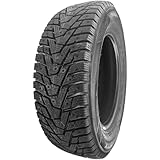
- Hankook Winter i Pike RS2 W429 is a Premium Touring studded winter tyre with directional tread pattern, designed for Passenger cars.
- Three Peak Mountain Snowflake certified
- Can be pinned with TSMI #12 studs, where permitted, for extra traction in severe ice and snow
- Wide block in the center of the tread provides improved snow and ice traction
- Built with a new rubber compound that boosts strength and durability for a longer tread life
Last update on 2026-06-13 / Affiliate links / Images from Amazon Product Advertising API
Hankook’s Winter iPike X W429 shines brightest for drivers who want studdable winter performance without the premium price tag. This directional-tread tire carries the Three Peak Mountain Snowflake certification, meaning it’ll handle snow and ice competently.
The 215/55R17 sizing fits many truck platforms, while its 94T load rating supports substantial payloads—1,477 pounds per tire. I appreciate the new rubber compound that resists cracking during deep freezes, plus that 11/32-inch tread depth gives you genuine snow-biting grip. If you prioritize value over luxury branding, this Hankook deserves serious consideration.
Best For: Budget-conscious drivers seeking reliable winter traction for passenger cars and light trucks who want the flexibility of studdable performance without paying premium prices.
Pros:
- Studdable design with Three Peak Mountain Snowflake certification provides excellent snow and ice traction when needed
- New rubber compound resists cracking in extreme cold while maintaining durability and extended tread life
- Competitive value pricing makes winter safety accessible without luxury brand markup
Cons:
- 215/55R17 sizing has limited fitment compatibility compared to more common winter tire sizes
- Studs must be purchased and installed separately where permitted by local regulations
- No performance data provided for wet or dry braking compared to competing studdable winter tires
Factors to Consider When Choosing Winter Tires for Trucks
I’ve learned the hard way that picking winter tires for your truck isn’t just about grabbing whatever’s on sale—you’ve got to match tire size to your vehicle’s specifications, verify the load index handles your truck’s weight capacity, and confirm the tread depth (measured in 32nds of an inch) meets winter performance standards. Temperature rating matters more than you’d think; I discovered this after watching a tire rated for mild winters turn rock-hard in genuine cold, so you’ll want that three-peak mountain snowflake symbol or the old three-UTQG rating indicating cold-weather grip. The construction type—whether it’s studded, studless, or friction-enhanced—fundamentally changes how your truck handles ice and snow, which is why I’m breaking down each factor so you can actually make an informed decision rather than just hoping for the best.
Tire Size Compatibility
Getting the right tire size for your truck’s winter setup isn’t just about matching numbers on a sidewall. It’s about ensuring your rig runs safely and accurately when temperatures drop.
I’ve learned that your winter tires must match your vehicle’s approved rim diameter and section width exactly. A 17-inch wheel demands tires listed for 17-inch rims, period. You’ll also need to verify load index ratings meet or exceed your truck’s required capacity, which prevents unsafe operation under winter stress.
Don’t overlook tire diameter and overall height, which affect your speedometer calibration and wheel well clearance. Rim width compatibility matters too; your tires should fall within your manufacturer’s recommended range for proper seating and performance. Get these specs right, and you’re golden.
Load Index Requirements
Why does load index matter more for winter tires than summer ones? Winter demands absolute certainty. Your tires must handle your truck’s actual weight without compromise. I’ve seen too many drivers ignore this detail, only to discover their tires can’t grip icy roads properly.
Your vehicle’s manual specifies a required load index (numbers like 120 or 97). Match it exactly. Multiply each tire’s load capacity by the number of tires on your axle, then verify this total meets or exceeds your gross axle weight rating (GAWR).
Underpowered ratings spell disaster: decreased traction, longer stopping distances, and potential tire failure when temperatures plummet. Higher load ranges, think Load Range E, accommodate heavier truck configurations more safely. Don’t shortcut this calculation; winter conditions expose every weakness in your setup.
Tread Depth Performance
While load index keeps your truck from sinking through the asphalt, tread depth is what actually grabs snow and ice. Here’s where most truck owners get it wrong. I’ve seen plenty of drivers ride marginal tread depths into winter, hoping for the best.
Winter tires perform optimally between 11/32″ and 16/32″ of tread depth. That deeper bite matters: full-depth sipes and grooves maintain their edge as treads wear, keeping you gripped on ice and slush when shallower alternatives fail.
Consistent depth across all grooves ensures balanced traction and predictability, basically your truck won’t surprise you mid-turn on a frozen road. Wider tread blocks with directional designs enhance snow grip further, though they’ll pack snow differently on pavement. Measure before winter arrives; don’t gamble on marginal rubber.
Temperature Rating Needs
How cold does it actually get where you drive? That question should guide your temperature rating selection. I’d recommend checking if your region dips consistently below freezing, because that’s when winter tire compounds truly shine.
You’ll want a tire labeled for severe winter conditions (look for the 3PMSF rating), which indicates the rubber stays flexible even at sub-zero temperatures. Studdable tires offer extra grip on ice, though legality varies by state.
Here’s the reality: regular all-season compounds harden dangerously in ultra-low temperatures, compromising traction when you need it most. Evaluate your actual driving patterns, if you’re tackling packed snow and icy surfaces regularly, invest in a tire engineered specifically for those conditions rather than settling for marginal performance.
Construction Type Matters
The internal structure of your winter tire, not just what you see on the surface, determines how well it’ll actually perform when the temperature drops and your truck’s carrying a full load. I’d recommend looking for radial construction, which provides stable handling and maintains a consistent contact patch in frigid conditions.
A 4-ply rating or higher is essential; it enhances load-bearing capacity and durability for typical truck applications. Consider studdable options if you’re in severe ice regions, they’re compatible with studded designs where regulations permit.
Check for the Three Peak Mountain Snowflake (3PMSF) certification, indicating severe winter performance criteria. These specifications aren’t just marketing speak; they’re engineering decisions that directly impact your truck’s safety and traction when conditions get genuinely nasty.
Seasonal Certification Standards
You’ll want to prioritize winter tires bearing the Three Peak Mountain Snowflake (3PMSF) certification. It’s not a marketing badge, but rather proof that a tire’s passed rigorous performance testing in severe snow and ice conditions. I’ve found that this certification matters because it guarantees your tire compound stays flexible below 45°F, maintaining grip when pavement turns treacherous.
Look for explicit winter or severe-weather designations on product pages; they signal whether a tire’s engineered for your climate. Some studdable options display stud compatibility notes, offering enhanced ice traction where regulations permit. Don’t overlook manufacturer-specified conditions either, they clarify real-world performance limits.
Essentially, seasonal certification transforms tire selection from guesswork into data-driven confidence, ensuring your truck stays planted through whatever winter throws at you.
Rim Width Specifications
Once you’ve verified your tire’s winter certification, matching it to the correct rim width becomes your next checkpoint. I won’t sugarcoat it: this detail separates trucks that handle predictably from those that don’t. Your tire’s specified rim width range (say, 7–8 inches for a 17-inch tire) directly impacts your contact patch and tread groove geometry.
Mount that same tire on a rim outside its approved width, and you’re inviting uneven wear, compromised snow traction, and hydroplaning vulnerability. The tread profile simply doesn’t perform as engineered. I’ve seen shoulder wear patterns emerge within a single winter from mismatched fitment.
Before purchasing, cross-reference your truck’s approved rim width against the tire manufacturer’s specifications, usually listed alongside section width and aspect ratio. This alignment preserves both safety and longevity.
Pressure Rating Capacity
Three numbers on your tire’s sidewall—maximum psi, load range, and your truck’s cold inflation requirement—form a critical triangle that most drivers glance at and promptly ignore. I’ve learned this matters more than it sounds.
Winter tires typically max out between 44 and 80 psi, depending on load range. A higher load range (say, E-rated) supports heavier trucks and demands correspondingly higher pressures. Here’s where it gets practical: your tire’s maximum pressure must meet or exceed your vehicle’s recommended cold inflation pressure—check your door jamb for this number.
Under-inflate, and you’ll wreck handling and accelerate wear on winter roads. Over-inflate? You’re trading traction for risk. Always verify your tire’s sidewall specs before mounting anything on your truck.