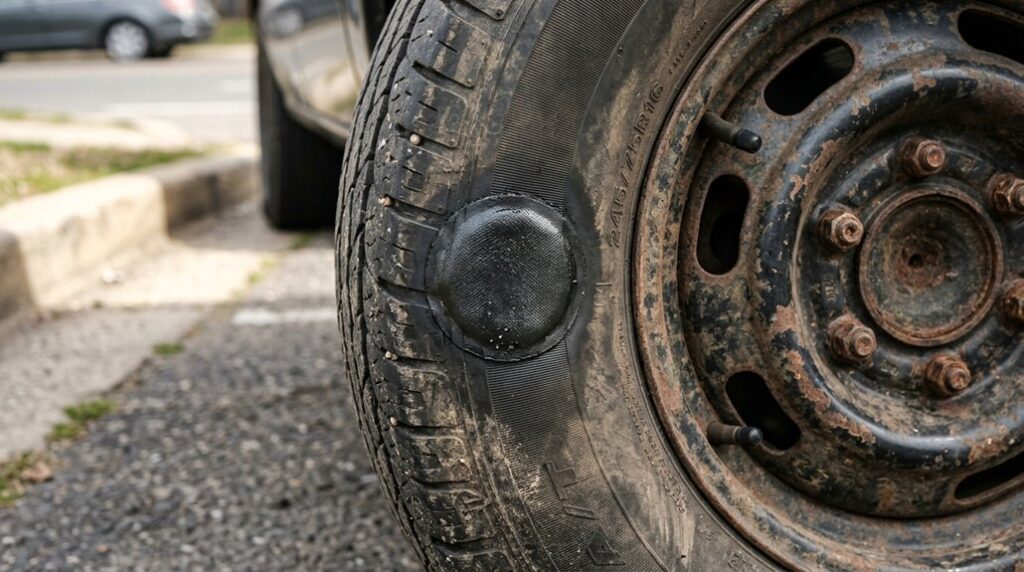
I want you to understand that a patched tire’s lifespan isn’t a fixed number. It depends on variables you control and some you don’t. When you repair a puncture properly, you’re restoring structural integrity, but that restoration has limits.
The patch-plug combination, vulcanized correctly in the tread’s center, can yield thousands of miles. Sidewall damage, however, renders the tire irreparable regardless of technique. What separates a temporary fix from a lasting repair comes down to placement, materials, and your vigilance afterward. There’s more you need to weigh before trusting that patched rubber on the highway.
How Long Does a Patched Tire Last?
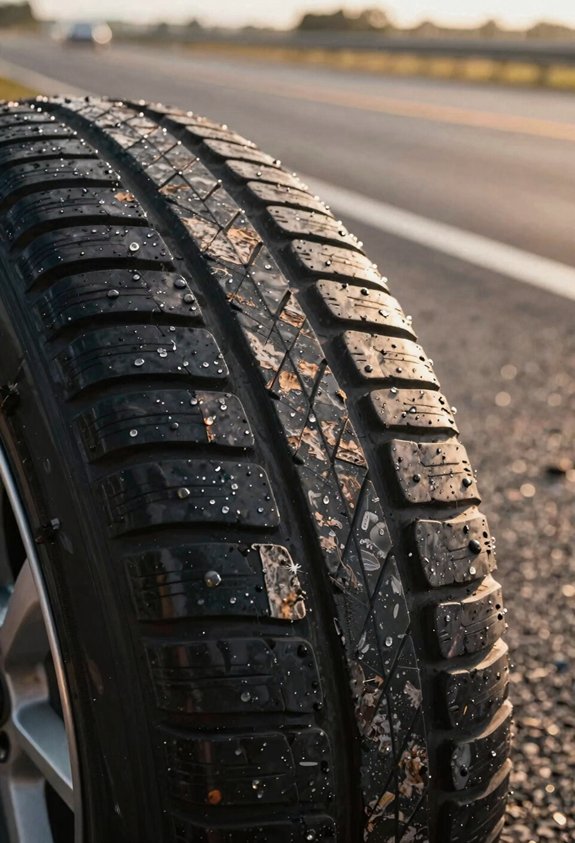
When I’m evaluating whether a tire repair will hold, I don’t rely on guesswork. I’ve got to contemplate where the puncture sits, how large the breach measures, and who performed the patchwork. A properly applied patch in the tread area, meaning the central portion of the tire, not the shoulder or sidewall, can last for the tire’s remaining service life. This typically spans 6 months to several years depending on driving conditions and maintenance habits.
Factors Determining Patch Longevity
Patch longevity hinges on three critical variables: puncture location, damage dimensions, and repair quality. A professional tire repair performed on a tread puncture under ¼ inch yields optimal results. Multiple repairs in proximity compromise structural integrity.
Patch longevity depends on location, size, and quality—professional repairs under ¼ inch in the tread area perform best.
Maximizing Remaining Tire Life
I’ve learned that diligent tire maintenance, maintaining proper inflation, scheduled rotations, and alignment checks, directly sustains patch durability. Neglect accelerates deterioration, potentially truncating service life from several years to mere months.
Where Can a Tire Actually Be Patched?
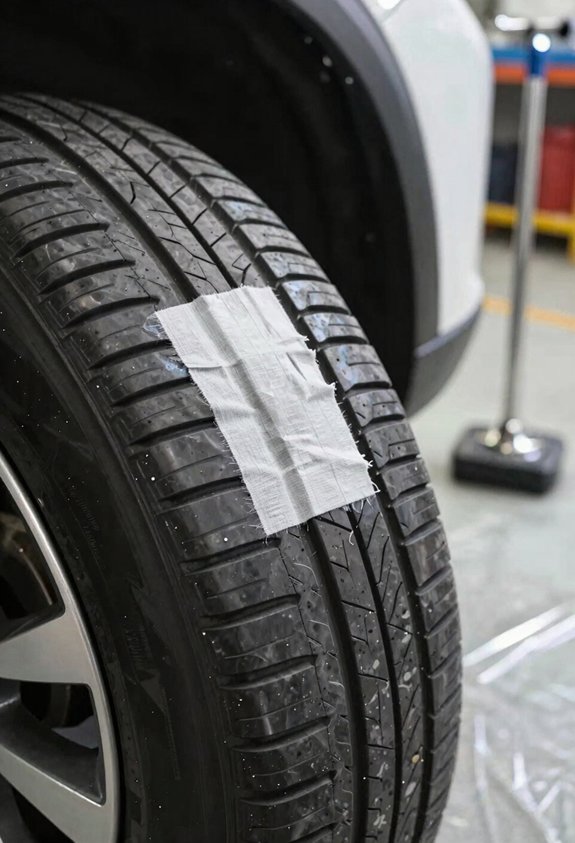
Although tire repair might seem straightforward, I’ve learned that knowing precisely where a patch can be applied separates a safe, lasting repair from a dangerous gamble. I always remind fellow drivers that puncture location determines everything about patch longevity and your safety on the road.
Where You’ll Find Repairable Damage
- The tread center offers the strongest, most flexible surface for sealing, where I’ve seen patches last the tire’s remaining life
- The inner liner receives the patch after dismounting, using vulcanizing cement for a permanent, airtight bond
- The shoulder and sidewall demand caution; when punctures creep too close, I recommend tire replacement instead
I won’t risk a patch near the sidewall; the flexing destroys seal integrity. For multiple holes clustered together, I choose tire replacement. Proper puncture location, combined with expert inner liner preparation, guarantees your patch performs reliably through thousands of miles.
When Is a Tire Unpatchable?
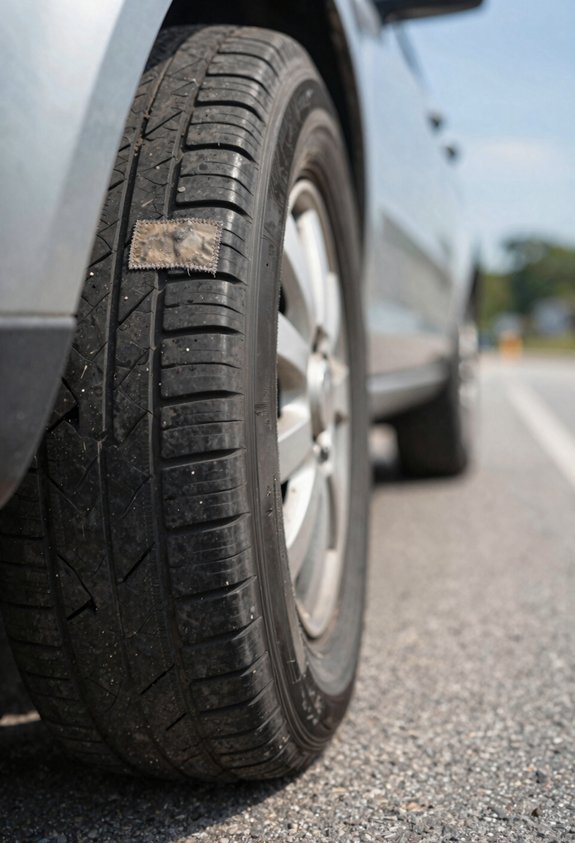
Beyond the tread’s center zone, I’ve encountered numerous scenarios where a tire simply won’t accept a patch, regardless of how minor the puncture might appear. Understanding when damage crosses into unpatchable territory keeps us all safer on the road.
Critical Factors Eliminating Patch Viability
| Damage Type | Location Impact | Recommended Action |
|---|---|---|
| Sidewall puncture | Zero patch viability | Immediate replacement |
| Shoulder damage | Reduced repair guidelines compliance | Professional evaluation |
| Multiple repairs | Compromised structural integrity | Replacement required |
| Large puncture (>¼ inch) | Exceeds repair guidelines | Tire replacement |
I’ve learned that structural compromise, cracks, bulges, or leakage around any previous patch, signals unpatchable damage demanding replacement. When we prioritize these indicators, we protect our community’s shared safety standards and avoid catastrophic failures.
Can You Patch the Same Tire Twice?
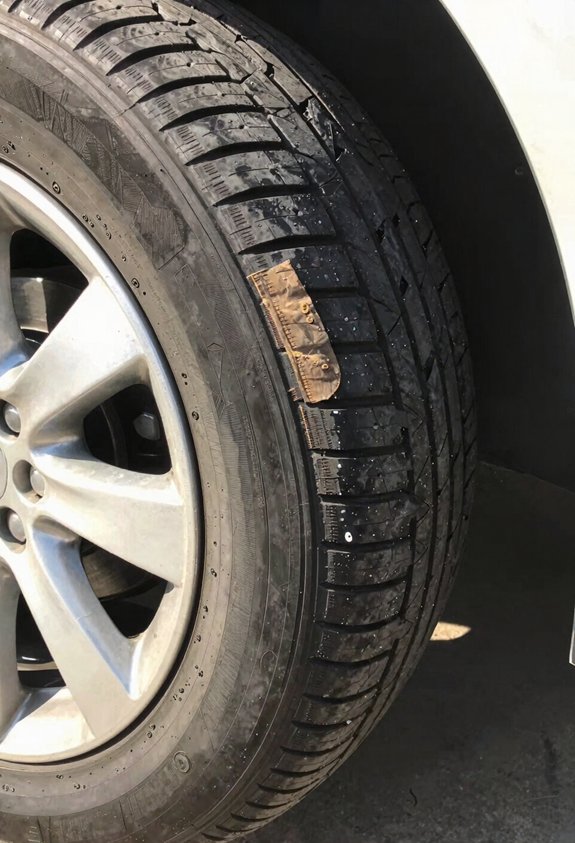
You might wonder whether a tire that’s already been patched can safely undergo a second repair, and the answer depends heavily on industry repair limits and strict safety considerations that govern qualified technicians. I’ll walk you through the specific parameters; puncture spacing requirements, maximum repairable damage limits, and structural integrity assessments determine whether a second patch is viable or if replacement becomes mandatory.
Understanding these constraints protects you from dangerous blowouts and helps you follow established tire repair standards set by organizations like the Tire Industry Association or U.S. Tire Manufacturers Association.
Industry Repair Limits
How many times can a tire safely undergo repair before its structural integrity becomes compromised? I’ve researched tire repair limits extensively, and here’s what you need to know about keeping your vehicle roadworthy.
- Patch longevity varies dramatically based on repair location and damage severity
- A single, properly applied patch-plug combination typically outlasts multiple inferior repairs
- Sidewall damage always requires replacement, regardless of other factors
Industry guidance generally favors one quality repair over multiple patches. When I examine tire repair limits, I find that re-patching the same tire, especially near previous repair locations, compromises structural integrity. Authorities recommend avoiding multiple repairs in close proximity, as this elevates failure risk.
Your safest path? One expert patch-plug, then vigilant monitoring for the tire’s remaining service life.
Safety Considerations
Multiple repairs on a single tire present distinct safety challenges that deserve careful examination, particularly when drivers wonder whether a second patch compromises roadworthiness.
Patch Longevity and Repeated Repairs
I’ve studied this closely, and here’s what I know: patch longevity depends heavily on puncture location, specifically whether damage hits the tread area or extends toward critical structural zones. Sidewall damage ruins any repair possibility; no professional will touch it.
When Replacement Becomes Necessary
Repeated patches near identical spots weaken tire integrity, making tire replacement our safest collective choice. Most technicians I respect won’t patch twice in proximity; failure signs, such as leaks, cracks, or uneven wear, demand immediate attention.
Critical Monitoring
A proper repair typically endures six months to several years. Watch closely: your vigilance protects everyone sharing our roads.
Patch vs. Plug: Which Repair Lasts Longer?
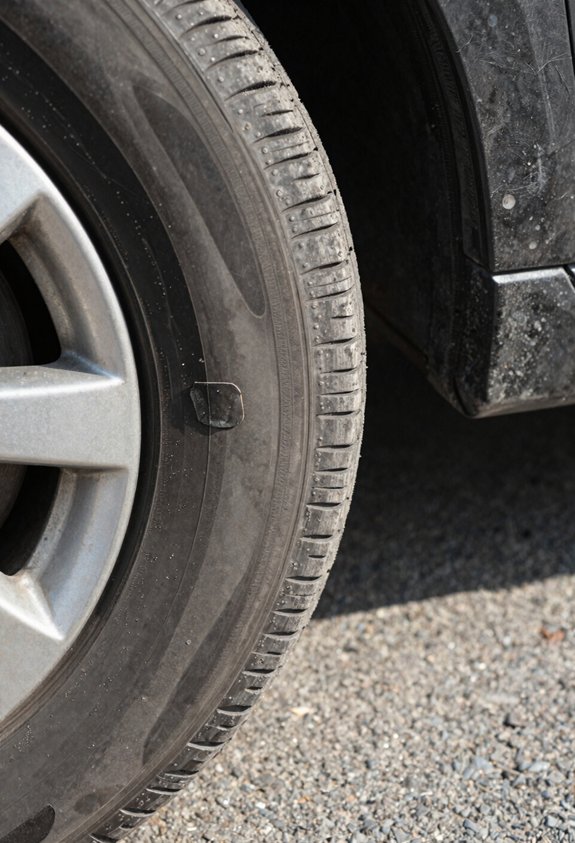
In terms of which tire repair delivers superior longevity, I’m going to give you a clear breakdown based on how these methods actually function inside the tire.
A patch creates a chemical bond with the inner liner through vulcanizing cement, delivering durability that typically spans the tire’s remaining life. A patch-plug combination represents the gold standard, sealing the puncture mechanically while reinforcing the interior structure against flex and heat cycles. However, sidewall risk remains the critical limiting factor; damage outside the tread zone compromises any repair’s integrity.
A patch bonds chemically for lifetime durability, while the patch-plug combination seals mechanically and reinforces against flex and heat—yet sidewall damage remains the hard limit.
A patch bonds molecularly to the liner, whereas plugs rely solely on friction and inflation pressure. Patch longevity exceeds plug performance, particularly under sustained highway speeds. The patch-plug combination delivers maximum reliability for punctures within repairable tread areas.
Multiple repairs clustered in one zone, or damage near the sidewall, necessitate replacement regardless of method selected.
Why Dismounting Matters for Patch Longevity
Why does a patch fail when shortcuts are taken? I’ve seen it happen when technicians skip dismounting, and the consequences are predictable, costly, and dangerous.
The Inner Liner Connection
When I dismount a tire, I gain direct access to the inner liner, the critical surface where patch longevity begins. Without this access, I’m guessing at damage I cannot see, and I’m applying patches through guesswork rather than precision.
Vulcanizing Cement and Adhesion
Here’s what proper dismounting enables: I clean and buff the inner liner, apply vulcanizing cement evenly, then press and roll the patch to eliminate air pockets. This maximizes adhesion at the molecular level.
Skip these steps, and I’ve created a leak path that will fail, often suddenly, sometimes catastrophically.
Professional repairs demand dismounting. Your safety, and your tire’s remaining service life, depend on it.
Driving Habits That Make or Break Your Patch
Once I’ve invested in a proper patch repair, I’m directly responsible for how long it lasts through the choices I make behind the wheel. Aggressive driving habits; rapid acceleration, hard braking, and sharp cornering; generate excessive heat and stress that compromise patch longevity, particularly at the repair site where structural integrity is already reduced. Rough roads and potholes accelerate localized wear, while abrupt high-speed driving amplifies dynamic loads that risk patch failure.
Critical Driving Adjustments
- Smooth acceleration and gradual braking reduce thermal buildup around the tire patch
- Avoiding potholes and uneven surfaces minimizes mechanical stress on repaired areas
- Maintaining manufacturer-specified tire pressure prevents uneven wear that undermines patch performance
Consistent tire maintenance, including rotation and alignment, distributes wear evenly. These practices aren’t optional precautions; they’re essential commitments that protect your investment and keep you safely connected to the road.
Do Professional Patches Outlast DIY Repairs?
The care I take behind the wheel matters, yet the quality of the repair itself sets the upper limit on how long my patch will hold.
DIY vs. Professional: What We Need to Know
When I weigh DIY vs. professional options, the technical gap becomes clear. A professional repair applies a vulcanized inner liner patch with specialized tools, stitchers, cement, heat, that fuse rubber permanently. My garage kit lacks this precision.
| Factor | DIY Risk | Professional Advantage |
|---|---|---|
| Bond quality | Air pockets, weak adhesion | Chemical vulcanization |
| Inspection | I miss internal damage | Trained eyes assess |
| Longevity | Months, maybe | Tire’s remaining life |
Patch longevity hinges on puncture location too. Shoulder or sidewall damage voids any repair. For larger wounds, technicians use combination patch-and-plug systems meeting critical safety standards. I’ll spend more at the shop, but I gain the security of knowing my patch won’t delaminate at highway speeds.
Warning Signs Your Patched Tire Is Failing
How do I know when my patched tire is starting to fail? I’ve learned to watch for specific warning signs that indicate my tire repair isn’t holding up, and I want you to recognize them too.
Critical Warning Signs of Patch Failure
- Visible damage around the patched area: I check for cracks, bulges, or separation near the patch, especially if the damage was near the sidewall or shoulder where stress concentrates
- Air leak indicators: I monitor for slow pressure loss, frequent drops requiring reinflation, or hissing sounds that signal the patch isn’t sealing properly
- Uneven wear patterns: I examine my tread for irregular wear, which often means the patch isn’t maintaining consistent air pressure, compromising structural integrity
If I notice these signs after a patch, I don’t hesitate, I get the tire inspected by a professional immediately, because patch failure can escalate quickly.
How to Maintain a Patched Tire Properly
I want you to understand that maintaining a patched tire demands vigilant attention to Pressure Monitoring Essentials and Rotation and Alignment, two interconnected practices that directly determine whether your repair reaches its maximum potential lifespan of 40,000 to 50,000 miles or fails catastrophically within weeks.
You’ll need to check your tire pressure at least biweekly, preferably weekly during temperature fluctuations, using a calibrated digital gauge, because even a 5 PSI drop places disproportionate stress on the patched region, accelerating flex-induced degradation of the vulcanized bond.
I also insist you adhere to a 5,000-7,500 mile rotation interval with precise alignment verification, since uneven wear patterns (cupping, feathering, or shoulder erosion) redistribute load vectors across the repair in ways the original calculation never anticipated, potentially inducing separation at the patch periphery.
Pressure Monitoring Essentials
- I check pressure weekly with a digital gauge, catching slow leaks before they compromise the repair
- I avoid underinflation, which generates destructive heat and flexing at the patch boundary
- I maintain manufacturer-specified PSI, preventing stress concentrations that accelerate fatigue
- My regular tire maintenance includes these checks alongside visual inspections. We’re protecting our investment, and our safety, through this vigilance.
- Rotation and Alignment
- Beyond pressure management, the mechanical positioning of your tires demands equal attention when you’re running a patched repair. I rotate my tires every 5,000 to 7,500 miles, following manufacturer recommendations, because this maintenance distributes tire wear evenly and protects patch longevity by preventing concentrated stress around the repaired area. Without rotation, uneven wear patterns develop, accelerating deterioration where the patch sits.
- I also check alignment regularly, since improper alignment causes abnormal tire wear that directly compromises a patched tire’s durability. Misalignment forces one section to bear disproportionate load, shortening patch life significantly. After any patching, I inspect for irregular wear patterns immediately, catching problems before they escalate.
- Combining consistent rotation, precise alignment, and vigilant maintenance helps your patched tire deliver maximum safe service life.