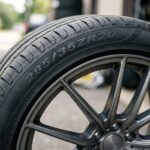
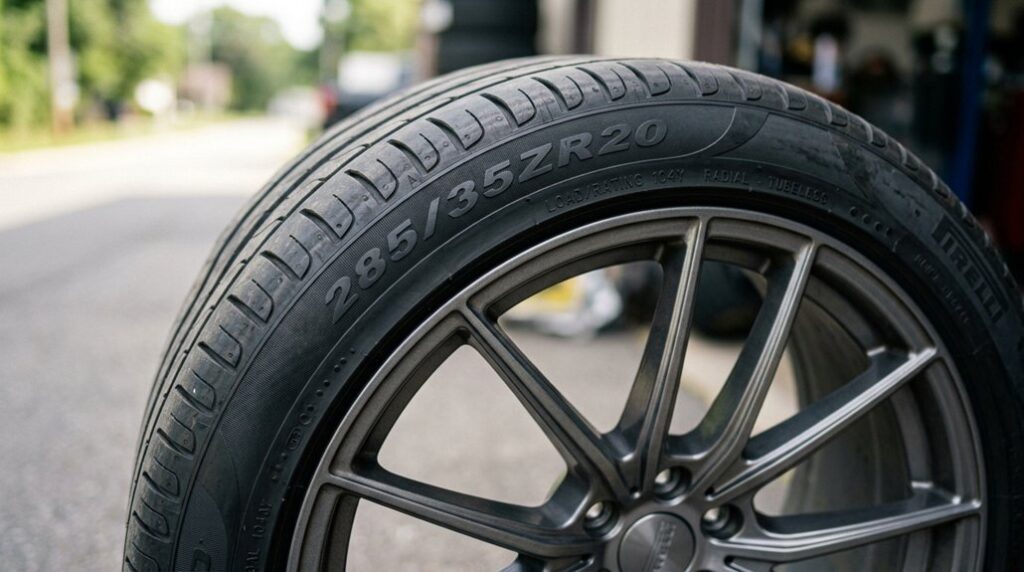
You might think tire codes are just random numbers, but once I break down my 285/70R17, you’ll see exactly how every digit determines fit, performance, and safety, and why getting one wrong can cost you.
What Does 285 Mean on a Tire?
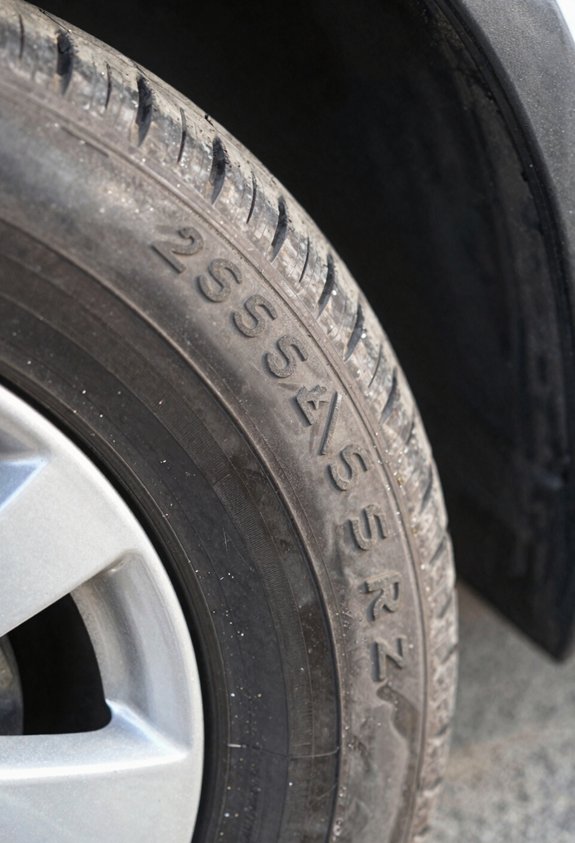
When I break down a tire marked with 285, I’m looking at the first number in a sequence that tells me exactly how much rubber spans across the wheel from sidewall to sidewall. This width measurement, 285 millimeters, represents the tire’s cross-section when viewed head-on, not its height or overall diameter.
I need you to understand that height depends entirely on the aspect ratio, which follows this number in the size code. The rim diameter comes last, completing the trio of critical dimensions. A 285-width tire creates a substantial footprint, demanding compatible wheel widths and adequate fender clearance.
You’ll find this specification across P-metric, LT-metric, and flotation tire categories, each carrying distinct load and service implications for your vehicle’s intended use.
How to Read a Full 285 Tire Size Code
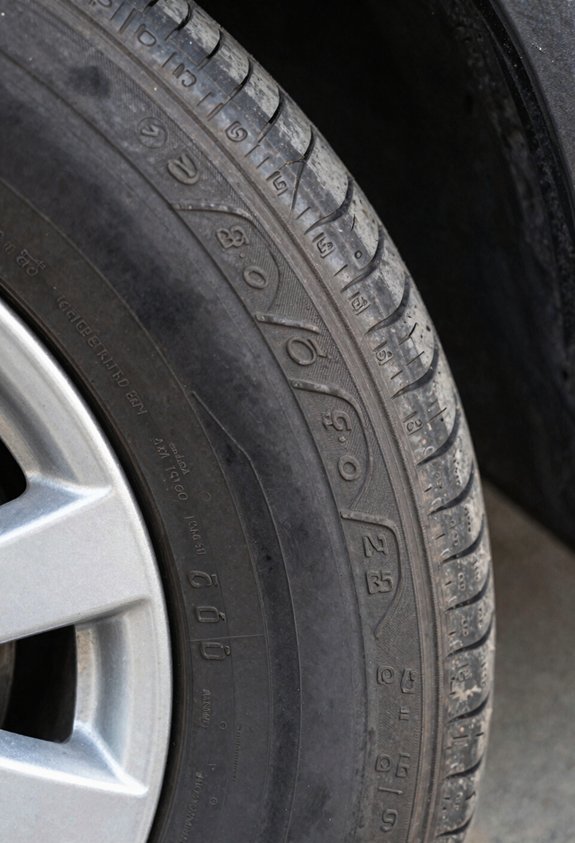
How exactly do I decode a complete 285 tire size code? I break it into sequential components, reading left to right. The width (285) appears first, measuring 285 millimeters across the tire’s widest point.
Next comes the aspect ratio, a two-digit number following the slash that expresses sidewall height as a percentage of width. Higher numbers mean taller sidewalls. After that, you’ll spot a letter: R indicates radial construction, the industry standard.
The rim diameter follows in inches, specifying which wheel size fits your tire (common values include 17, 18, or 20). Finally, additional codes may appear, such as load index and speed rating, which I’ll address separately. Learn this sequence, and you’ll never misread a tire specification again.
How Aspect Ratio Affects Your 285’s Look and Feel
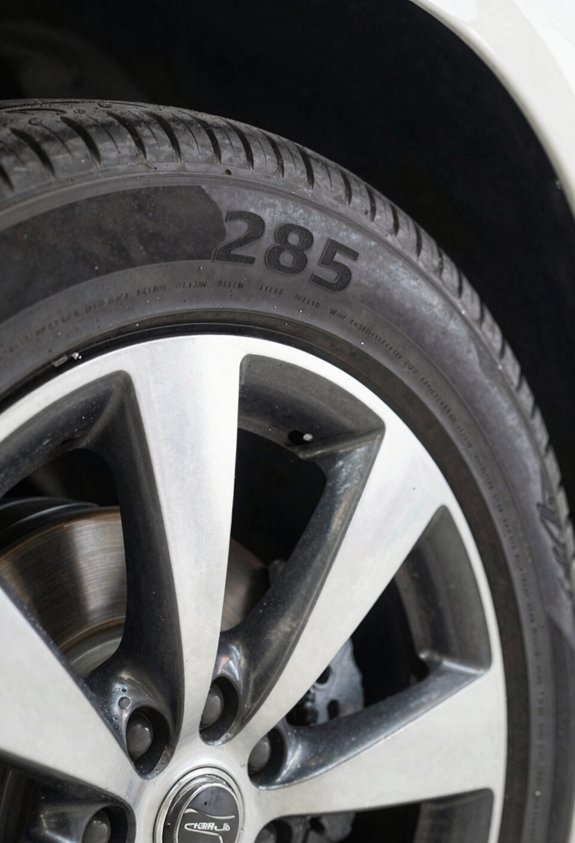
I’ll explain how the aspect ratio shapes both your tire’s appearance and performance on the road. A higher aspect ratio, such as 285/70 or 285/75, creates a taller sidewall that absorbs road imperfections more effectively, delivering superior cushioning for rough terrain or heavy loads. A lower profile like 285/45 or 285/50 reduces sidewall flex for sharper steering response and improved cornering stability at the cost of increased harshness over bumps.
Understanding this trade-off, between the plush compliance of a 70-series tire and the precision of a 45-series, is essential. Your choice directly impacts ride quality, aesthetic stance, and even the risk of wheel damage if you select too low a profile for your driving conditions.
Taller Sidewall Benefits
The interplay between section width and aspect ratio determines a tire’s visual proportions and dynamic characteristics, which is why I’ve learned to scrutinize these numbers before any purchase.
Taller Sidewall Benefits
When I select a 285 tire with a higher aspect ratio, say, 285/70 versus 285/65, I’m choosing increased sidewall height, which translates to tangible advantages. That additional sidewall height, calculated as 70% of the 285mm section width (199.5mm), provides greater cushioning against road imperfections.
The benefits extend beyond pure measurement: I’ve found that elevated aspect ratios distribute impact forces more gradually, reducing transmitted vibration to the cabin. This directly enhances ride comfort, particularly on uneven surfaces or during extended highway cruising.
The taller profile also affords modest protection against curb damage and pothole impacts, though I remain mindful that excessive sidewall flex demands careful load management and proper inflation monitoring.
Lower Profile Handling
Opposing the cushioning advantages of taller sidewalls, I’ve found that dropping the aspect ratio on a 285 tire transforms both aesthetics and dynamics in ways that demand careful contemplation.
A lower aspect ratio (e.g., 40 versus 65) reduces sidewall height, creating that aggressive stance we crave while sharpening steering response. However, pairing a 285/40R22 with its 22-inch rim diameter means less cushion between you and the road.
Key Trade-offs to Ponder:
- Enhanced Feedback: Reduced sidewall flex delivers precise road communication, though sharp impacts transmit directly to the chassis.
- Visual Proportion: The interplay between width, sidewall height, and rim diameter creates dramatically different aesthetic profiles; lower ratios emphasize wheel design.
- Surface Sensitivity: Rough pavement becomes more pronounced, demanding vigilance on deteriorated roads to protect both tire and wheel from damage.
Why Rim Diameter Must Match Exactly on 285 Tires
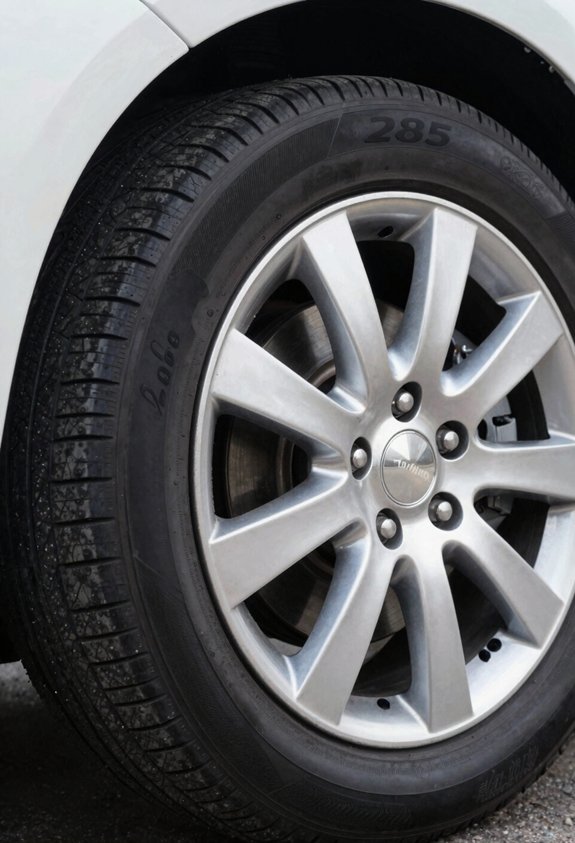
Because the rim diameter serves as the fixed anchor point where the tire bead seals against the wheel, I cannot overstate how critical an exact match becomes when mounting 285-series tires. The rim diameter, that final number in your size designation, such as 16, 17, or 18 inches, dictates the precise bead seat circumference where your tire’s inner edge must lock into place.
I want you to understand that even a half-inch deviation destroys fitment accuracy, creating either a dangerous gap where the bead cannot seal or forcing an overstretch that risks catastrophic failure. When you’re running 285-width rubber, whether on a lifted truck or performance SUV, I’ve seen how mismatched diameters lead to immediate clearance conflicts, uneven wear patterns, and compromised handling.
Your wheel’s bead seat distance must mirror the tire’s specification exactly; there’s no acceptable tolerance range here, no room for approximation or “close enough” thinking.
What Speed Rating and Load Index Mean for 285s
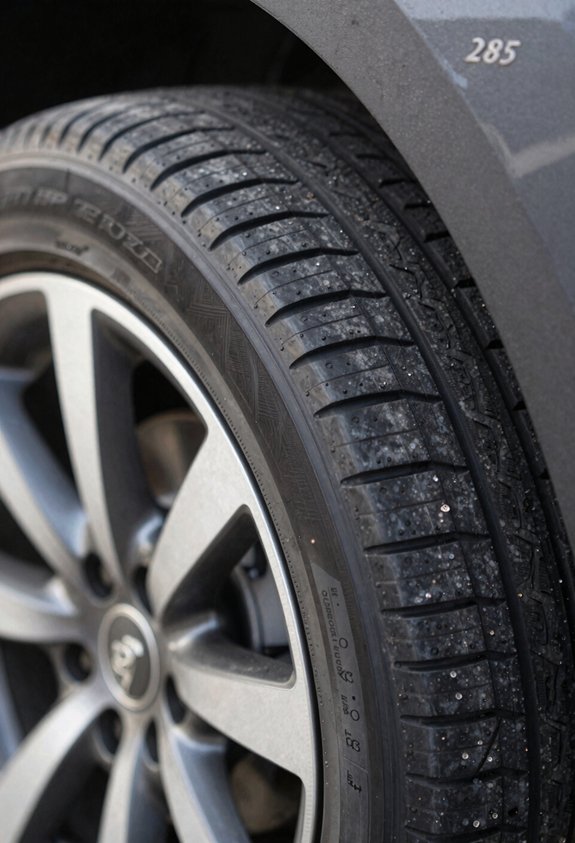
- Load Index: Higher numbers mean greater weight capacity; multiply by four for total vehicle support.
- Speed Rating: Never downgrade below manufacturer specifications, or you’ll compromise structural integrity.
- Combined Ratings: Your aspect ratio affects heat buildup, directly impacting how these ratings perform under stress.
How 285 Width Compares to 275 and 305 Sizes
Why does a mere 10-millimeter difference matter when you’re choosing between tire widths? I’ve found that every millimeter affects contact patch, handling, and compatibility.
Understanding the 285 Width
The 285 width measures 285 millimeters from sidewall to sidewall. Compared to 275, you’re gaining 10 millimeters of tread contact, which marginally improves grip and stability. Against 305, the 285 sacrifices 20 millimeters, potentially reducing outer shoulder grip and overall footprint.
Critical Compatibility Factors
- Rim diameter remains unchanged across all three: 17″ or 18″ wheels accommodate 275, 285, or 305 widths
- Aspect ratio must adjust to maintain similar overall diameter; a 285/70R17 differs in height from 275/70R17
- Verify fitment clearances, load index, and speed rating when swapping sizes
I’ve learned that matching width to your wheel and vehicle requirements guarantees proper performance without compromising safety.
Is Your Vehicle Right for 285 Tires?
Before you commit to 285 tires, I’ll help you verify your vehicle’s compatibility and confirm it meets your load capacity requirements, since improper fitment risks suspension interference, speedometer inaccuracy, and compromised handling. You’ll need to check your owner’s manual or door placard for original equipment specifications, making sure you have adequate wheel well clearance for the 285mm section width.
This tire size typically demands 8.5 to 10.5-inch wheel widths and sufficient offset to avoid rubbing at full steering lock. Also, compare the load index of your prospective tire, often 114 to 125 for common 285 sizes, to your vehicle’s gross axle weight ratings. Under-rated tires create dangerous blowout risks under heavy loads or towing conditions.
Vehicle Compatibility Check
How do I know if my vehicle can actually handle a 285 tire without rubbing, binding, or throwing off my speedometer? I check tire compatibility by comparing every dimension against my stock setup.
Critical Fitment Checks
- Wheel Width: I verify my wheel’s interior width falls within the tire manufacturer’s approved range, since a 285 millimeter section width demands sufficient lateral support without bead distortion or unsafe flex.
- Overall Diameter: I calculate the complete tire height, multiplying 285 by the aspect ratio percentage, doubling that sidewall height, then adding my rim diameter in inches, making sure my speedometer calibration remains within 3% deviation.
- Physical Clearance: I measure my fender wells, suspension components, and turning arcs at full lock, confirming adequate space for this wider footprint throughout compression and steering travel.
Load Capacity Requirements
Beyond mere dimensional fitment, I must scrutinize whether a 285 tire can shoulder my vehicle’s operational demands without compromising structural integrity or safety margins.
Understanding Load Index and Capacity
Every 285 tire carries a load index, a two- or three-digit number molded on the sidewall, that directly correlates to its maximum load capacity in pounds or kilograms. I cannot simply assume a 285 width guarantees sufficient strength; I must cross-reference this index against my vehicle’s gross axle weight ratings, which are found on the driver’s door placard or owner’s manual.
When Standard Loads Fall Short
For trucks, SUVs, or towing applications pushing conventional limits, I seek the XL designation (extra load), signifying reinforced construction and higher inflation pressures. This marking indicates the tire withstands heavier burdens without excessive sidewall flex, heat buildup, or premature failure.
Critical Compatibility Checks
Before committing to 285 tires, I verify three elements: my vehicle’s manufacturer-specified load index minimum, my typical cargo and passenger weight, and whether my driving habits (frequent hauling, off-roading) necessitate XL-rated reinforcements.
Mismatched load capacity risks catastrophic blowouts, uneven wear, and voided warranties.
Popular 285 Sizes for Trucks and SUVs
Where exactly do 285-width tires fit into the broader terrain of truck and SUV applications? I see you exploring this market, and I’ll guide you through the specifics so you belong among informed enthusiasts.
The width of 285 millimeters provides substantial footprint for heavier vehicles, while the aspect ratio determines sidewall height: lower ratios (65, 60, 55) yield stiffer handling, higher ratios (75, 70) absorb rough terrain. The rim diameter, measured in inches, must precisely match your wheel’s bead seat.
Popular configurations include:
- 285/70R17, common on lifted trucks, balancing clearance and load capacity
- 285/75R16, preferred by overlanders seeking taller sidewalls for terrain compliance
- 285/65R18, factory-equipped on modern SUVs, merging street manners with moderate off-road capability
You’ll typically encounter radial construction (R) in LT-Metric or P-metric formats, each carrying distinct load indexes requiring careful verification against manufacturer specifications to prevent unsafe underloading or overloading scenarios.
Will 285 Tires Fit Your Stock Rims?
Whether you’re upgrading for aesthetics or capability, I’ll walk you through the critical measurements that determine if 285-width tires will mount safely on your factory wheels.
Width Compatibility
Your stock rims must accommodate a 285mm section width. Check your wheel’s specified tire width range, typically stamped on the backside or in your owner’s manual.
Rim Diameter Matching
The final number in your tire size, 285/60R16, 285/70R17, 285/75R16, indicates required rim diameter. Your stock wheels must match exactly; mounting a 285/70R17 on a 16-inch rim creates dangerous fitment failure.
Critical Fitment Verification
- Confirm your wheel’s width range accepts 285mm tires
- Verify rim diameter alignment (16″, 17″, 18″, etc.)
- Check load index and speed rating independently
Mismatched rim diameter or inadequate wheel width causes bead seating failures, air leaks, and catastrophic blowouts. Always cross-reference manufacturer specifications before purchase.
How to Pick 285 Tires for Where You Drive
Selecting the right 285 tire requires careful attention to three critical factors: terrain type, load capacity, and climate performance. You’ll need to match the tire’s construction, specifically its tread pattern, sidewall strength, and rubber compound, to the conditions you’ll actually encounter. That might mean rocky trails requiring aggressive tread, highway hauling demanding higher load indexes, or winter temperatures needing specialized compounds.
Getting this wrong creates real safety risks. A tire optimized for dry pavement will fail catastrophically on mud or snow, while an overloaded tire with an insufficient load rating risks blowout at highway speeds.
Terrain Type Considerations
How exactly do terrain demands reshape the 285 tire selection process? I guide you through matching your 285 tire’s dimensions to where you actually drive, because the wrong profile wastes your investment and compromises safety.
Three Terrain-Driven Selection Criteria
- Tread pattern coordination: I pair aggressive, open-shoulder designs with higher aspect ratios (70-75) for mud or sand, where the 285 width needs self-cleaning grooves to maintain traction in loose substrates.
- Ground clearance optimization: I select taller sidewalls, calculated from your 285mm width multiplied by aspect ratio percentages, to increase overall diameter, protecting underbody components on rocky trails without suspension modifications.
- Traction surface adaptation: I choose lower profiles (65 or below) for pavement, where reduced sidewall flex improves cornering response and steering precision on your 17-inch or larger rims.
Your terrain defines your tire’s purpose.
Load Capacity Requirements
Once you’ve matched your 285 tire’s dimensions to your terrain, you’ll need to verify it can actually carry your vehicle’s weight without failure. Every 285 tire displays a load index on its sidewall, typically following the size designation, as in 285/60R18 114T, and this number directly translates to maximum load capacity in pounds. I always cross-reference this figure against my vehicle’s placard requirements, making sure the tire’s rating meets or exceeds manufacturer specifications.
For those of us hauling trailers or heavy cargo, standard P-metric 285 tires often prove insufficient; instead, I recommend LT/Load ratings (LT-metric or C-type construction), which provide reinforced sidewalls and higher load indices specifically engineered for demanding applications. Never compromise here, under-rated tires risk catastrophic failure under stress.
Climate Performance Factors
Where you drive matters just as much as what you drive when selecting 285 tires, since climate conditions directly determine which tread compounds, siping patterns, and speed ratings will keep you safe and optimize tire longevity. I’ve learned that matching your 285 tires to local weather conditions isn’t just about comfort; it’s about maintaining traction when you need it most.
Key Climate Considerations for 285 Tires
- Winter-rated designs deliver superior traction in slush and ice through deeper tread depths and specialized rubber compounds that remain pliable below 45°F
- Heat-resistant constructions preserve integrity in high temperatures, preventing premature degradation of sidewalls and tread pattern stability
- Water-evacuating tread patterns featuring directional arrows and lateral sipes maximize wet-weather performance by channeling water away from the contact patch
Common Mistakes When Buying 285 Tires
Why do so many drivers end up with tires that compromise their vehicle’s handling, safety, or fuel economy? I’ve watched countless buyers overlook critical specifications while rushing to upgrade their trucks or SUVs with aggressively sized 285 rubber.
Ignoring Load and Speed Ratings
When I’m shopping 285 tires, I always verify the load index and speed rating meet or exceed my vehicle’s requirements and the OEM recommendations. A 285/70R17 with insufficient load capacity (anything below your placard specification) risks structural failure under heavy towing, while an inadequate speed rating creates dangerous heat buildup during sustained highway driving.
I’ve learned that sidewall markings like “121S” aren’t arbitrary; these numerical codes translate directly to maximum weight capacities and velocity thresholds.
Many enthusiasts fixate on width alone, sacrificing sidewall compliance or destabilizing their speedometer calibration through untested diameter changes. What fits isn’t always what functions optimally.