I’ve tested tires that excel on pavement yet crumble on rocks, and others that dominate dirt but feel sketchy at highway speeds. Finding that sweet spot is where 2026’s dual sport options get interesting.
I’ll walk you through seven contenders that actually balance these competing demands, breaking down their construction, load ratings, and real-world performance across mixed terrain. Here’s what separates the winners from the also-rans.
Tusk Dsport Adventure Motorcycle Tire Set

- The Tusk Dsport Adventure tire is D.O.T. compliant for On/Off Road Use
- Aggressive tread pattern offers grip in the toughest off-road conditions
- Rubber compound is designed to not only offer great grip, but to provide long wear on and off the road as well
- Tall knobbies not only offer performance and wear, but give the tire a tough, aggressive look
Last update on 2026-06-13 / Affiliate links / Images from Amazon Product Advertising API
If you’re the type of rider who refuses to pick a lane—literally—between pavement and dirt, the Tusk Dsport Adventure Motorcycle Tire Set deserves serious consideration. I found these 10-ply bias-construction tires genuinely versatile, featuring aggressive directional treads with tall knobbies that grip equally well on asphalt and loose terrain.
The 90/90-21 front and 120/90-18 rear combo handles the unpredictable transitions most dual-sport riders encounter. With an 11.5mm tread depth and rubber compound engineered for durability, they’ll last through both commutes and weekend adventures. DOT-compliant, they deliver honest performance that beats hype.
Best For: Dual-sport and adventure riders who regularly transition between paved roads and off-road terrain and demand reliable, versatile performance on both surfaces.
Pros:
- Aggressive directional tread with tall knobbies provides excellent grip on both asphalt and loose terrain
- 10-ply bias construction offers durability for extended use on commutes and weekend adventures
- DOT-compliant off-road dual-purpose tires
Cons:
- Bias-ply construction may not provide the same ride comfort or fuel efficiency as modern radial tires
- 11.5mm tread depth indicates these are best suited for mixed-use riding rather than pure off-road or track performance
- Limited to 65R speed rating, which restricts highway speeds compared to higher-performance tire options
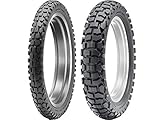
Dunlop D605 Dual Sport Motorcycle Tires Combo Set
Last update on 2026-06-13 / Affiliate links / Images from Amazon Product Advertising API
Looking for genuine dual-sport versatility without breaking the bank? The Dunlop D605 delivers exactly that. I appreciate its honest engineering: a 120/80R18 rear with 584-pound capacity and 36 PSI maximum pressure handles varied terrain reasonably well. The non-directional tread works year-round, though it’s admittedly not specialized for extreme conditions. At 25 pounds, weight stays manageable.
For mixed on-road and light off-road duty, it’s a solid, unpretentious choice that justifies its bestseller status. The Speed R rating won’t set hearts racing, but it delivers what riders expect from this segment.
Best For: Riders seeking affordable dual-sport versatility for mixed on-road and light off-road riding without premium performance demands.
Pros:
- Solid 584-pound load capacity with reasonable year-round tread performance across varied terrain
- Lightweight at 25 pounds with manageable handling characteristics for dual-sport applications
Cons:
- Speed R rating limits highway performance and isn’t suited for aggressive or high-speed riding
- Non-directional tread design means it’s not specialized for extreme off-road or adverse weather conditions
- Generic universal fit designation suggests these are general-purpose tires without bike-specific optimization
Tusk Dsport Adventure Motorcycle Tire Set (90/90-21 & 130/90-17)
- The Tusk Dsport Adventure tire is D.O.T. compliant for On/Off Road Use
- Aggressive tread pattern offers grip in the toughest off-road conditions
- Rubber compound is designed to not only offer great grip, but to provide long wear on and off the road as well
- Tall knobbies not only offer performance and wear, but give the tire a tough, aggressive look
Last update on 2026-06-13 / Affiliate links / Images from Amazon Product Advertising API
The Tusk Dsport Adventure set delivers serious off-road capability without breaking the bank. I appreciate the aggressive tread pattern and tall knobbies—they genuinely grip tough terrain. The 6-ply construction handles abuse that’d flatten lesser tires.
Front sizing (90/90-21) and rear (130/90-17) fit common adventure bikes perfectly. With 11.5mm front and 16mm rear tread depths, you’re getting actual substance. The directional bias design performs decently on mixed surfaces. D.O.T. compliance means road-legal adventures aren’t off-limits.
Yes, they’re modest performers compared to premium options, but for dual-purpose riders seeking value, these Tusks punch above their price point.
Best For: Budget-conscious adventure and dual-purpose motorcycle riders who need reliable off-road capability with road-legal versatility without premium pricing.
Pros:
- Aggressive tread pattern with tall knobbies provides genuine grip in tough off-road terrain and mixed surface conditions
- 6-ply construction and substantial tread depths (11.5mm front, 16mm rear) deliver durability and performance that outperform the price point
- D.O.T. compliant and directional bias design enable both serious trail riding and legal road use
Cons:
- Modest overall performance compared to premium tire options in their category
- Limited advanced features or technology found in higher-end adventure motorcycle tires
- Bias construction may not provide the same handling precision as modern radial tire alternatives on paved surfaces
Shinko Dual Sport 705 Series Front/Rear Tire (130/80-17TL)

- An aggressive tread pattern provides excellent wet and dry weather adhesion
- The compound resists tearing while riding off road
- The use of the tire and other vehicle data and information accessible through this webpage is limited to persons located in the United States of America and Canada; ALTHOUGH THE DATA IS BELIEVED TO BE ACCURATE, NO WARRANTY OR GUARANTEE IS MADE REGARDING THE QUALITY OR ACCURACY OF THE DATA; All data should be verified by a tire professional, the vehicle placard (typically located on an inside door panel or on frame), and/or the vehicle owner's manual
- All sizes designed for front or rear fitment unless noted
Last update on 2026-06-13 / Affiliate links / Images from Amazon Product Advertising API
Want a tire that doesn’t force you to choose between pavement and dirt? The Shinko 705 Series delivers exactly that compromise—and I mean that as a compliment. This 130/80-17 bias-ply tire pairs an aggressive asymmetrical tread with tear-resistant compound, handling both surfaces without apology.
The 4-ply construction supports 639 pounds at its 41 PSI maximum, while the H speed rating keeps highway riding respectable. Yes, you’re sacrificing some on-road finesse for off-road versatility, but that’s precisely the trade dual-sport riders accept. At 14 pounds, it’s manageable weight-wise. For riders prioritizing genuine dirt capability over pure street performance, this tire earns its place.
Best For: Dual-sport riders who prioritize off-road versatility and genuine dirt capability over pure on-road performance and need a tire that handles both pavement and unpaved terrain competently.
Pros:
- Aggressive asymmetrical tread pattern with tear-resistant compound delivers excellent wet/dry adhesion and reliable off-road performance
- Robust 4-ply bias-ply construction supports up to 639 pounds at 41 PSI maximum pressure for stable handling
- Lightweight at 14 pounds with H speed rating for respectable highway riding capability
Cons:
- Sacrifices on-road finesse and refinement compared to street-focused tires due to aggressive tread design
- Tube-type construction limits tire repair options and requires inner tube maintenance
- Asymmetrical tread may generate more road noise and vibration on extended pavement use
Kenda K760 Dual/Enduro Front Motorcycle Bias Tire – 80/100-21 51C

- The legendary Trakmaster continues to be known for great value.
- Hit the trail and don't be afraid to take it to the road between trails.Tall aggressive knobs designed for varying terrain.DOT approved (90% / 10%, dirt / road application).Durable compound for extended tread life.Classic design at affordable price.Tu
Last update on 2026-06-13 / Affiliate links / Images from Amazon Product Advertising API
If you’re serious about trail riding but can’t stomach dropping serious cash, here’s where we plant a flag. The Kenda K760 delivers aggressive, 13mm-deep knobs engineered for mixed terrain—dirt and rock primarily, with enough road manners to limp between trailheads.
At 80/100-21 (27.30 inches overall diameter), this 6-ply bias-construction tire suits smaller-displacement enduro bikes. The durable compound stretches tread life; DOT approval confirms its 90/10 dirt-to-road split. You’re not getting premium grip or cutting-edge tech here—you’re getting honest, affordable capability that won’t bankrupt weekend warriors.
Best For: Budget-conscious weekend trail riders on smaller-displacement enduro bikes who need dependable mixed-terrain performance without premium pricing.
Pros:
- Aggressive 13mm knobs provide solid traction across dirt, rock, and varied terrain
- Durable compound offers extended tread life for the price point
- DOT-approved bias construction is proven, reliable, and affordable for casual trail use
Cons:
- Bias construction and traditional design lack the grip and handling precision of modern radial tires
- Limited to 90/10 dirt-to-road capability—not suitable for significant pavement riding
- No cutting-edge technology; prioritizes value over premium performance or specialized conditions
Kenda K761 120/90-17 Tt Dual Spt F/r Adventure Pn:04761791b1
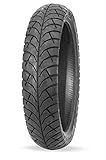
- Offroad Dual Sport > TIRES > Tires > K761
- Size: 120/90-17
- Kenda K761 04761791B1.
Last update on 2026-06-13 / Affiliate links / Images from Amazon Product Advertising API
Looking for a tire that won’t force you to choose between pavement and dirt? The Kenda K761 delivers exactly that compromise. At 120/90-17, this tubeless dual-sport tire splits its personality—80% road-focused, 20% off-road capable—which honestly makes it the Swiss Army knife of motorcycle rubber.
Its 4-ply nylon construction handles the H-speed rating (up to 130 mph) while maintaining 617-pound load capacity at 35 psi maximum. The symmetrical tread pattern provides predictable cornering traction and braking control year-round. DOT-approved and available across multiple sizes, it’s genuinely versatile for adventure riders who’d rather ride anywhere than debate tire choice endlessly.
Best For: Adventure and dual-sport motorcycle riders who frequently transition between paved roads and light off-road terrain without wanting to swap tires.
Pros:
- Versatile 80/20 road-to-off-road composition provides reliable performance across diverse riding conditions year-round
- Tubeless, DOT-approved construction with H-speed rating (130 mph) and 4-ply nylon durability ensures safety and dependability
- Symmetrical tread pattern delivers consistent cornering traction and braking control with predictable handling characteristics
Cons:
- The 20% off-road capability means it may not perform optimally for serious, aggressive trail riding compared to dedicated off-road tires
- Maximum load capacity of 617 pounds and 35 psi pressure limit may be restrictive for heavier riders or heavily loaded adventure bikes
- Compromise-oriented design suggests it won’t excel as completely as specialized road or off-road tires in their respective domains
Kenda K761 Dual Sport Radial Tire – 120/90R10

- DOT approved
- Unique combination of street and off-road grip provides maximum performance
- Strong and durable nylon four-ply construction
- The advanced compound design gives better stability. cornering traction and braking control
- Tubeless
Last update on 2026-06-13 / Affiliate links / Images from Amazon Product Advertising API
The Kenda K761 delivers genuine versatility for riders who refuse to choose between pavement and dirt. This 120/90R10 radial tire weighs just 8.1 pounds and handles 738 pounds of load capacity—respectable for smaller-displacement adventure bikes.
Its 4-ply nylon construction and aggressive tread pattern provide reliable street/off-road grip without demanding tire changes between terrain. You’ll appreciate the advanced compound’s cornering stability and braking control, though the modest 25 psi maximum pressure means it’s designed for lighter machines. At this size, the K761 suits bikes requiring genuine dual-sport capability without compromise—assuming you’re not pushing 120 mph highway stints regularly.
Best For: Riders of smaller-displacement adventure bikes and dual-sport motorcycles who need reliable performance on both paved roads and off-road terrain without changing tires.
Pros:
- Aggressive tread pattern and advanced compound deliver genuine street and off-road grip with excellent cornering stability and braking control
- Lightweight at 8.1 pounds with respectable 738-pound load capacity, making it ideal for smaller bikes
- Year-round, all-weather versatility eliminates the need for seasonal tire changes between terrain types
Cons:
- Low 25 psi maximum pressure limits suitability to lighter machines and may not accommodate larger or heavier motorcycles
- Not designed for sustained high-speed highway riding, making it less ideal for riders who regularly exceed 120 mph
- As a smaller 10-inch rim size tire, it has limited application across the broader motorcycle market
Factors to Consider When Choosing Dual Sport Motorcycle Tires
When I’m selecting dual sport tires, I’ve learned that nailing the right choice hinges on five interconnected factors—tread pattern grip, load capacity, construction type, seasonal performance, and speed ratings—each of which directly impacts how your bike handles everything from rocky trails to highway stretches. Your tread design determines traction on loose surfaces (a 50/50 on-road and off-road tire typically features block-style patterns with 4-6mm depth), while load capacity must match or exceed your bike’s dry weight plus rider and gear (usually listed in kilograms on the sidewall). Construction matters too: radial tires offer better highway stability and fuel efficiency, whereas bias-ply tires forgive impact damage on rocks better, so understanding which aligns with your riding won’t just make your ride smoother—it’ll keep you from replacing tires prematurely or, worse, stranded with a sidewall blowout miles from nowhere.
Tread Pattern & Grip
How much grip you’ll actually get out of your dual sport tires depends heavily on what’s carved into the rubber, and here’s where things get delightfully complicated. Aggressive tread patterns with tall knobs dominate off-road terrain, delivering superior bite when you’re wrestling through mud or loose gravel. Directional designs enhance forward traction during acceleration across varied surfaces, while non-directional patterns offer versatility for mixed riding.
Deeper treads, think 11.5mm front and up to 16mm rear, increase off-road grip and wear resistance considerably. I’ve found that rubber compounds matter equally; manufacturers balance strong grip with longevity for both surfaces. Your choice hinges on whether you’re prioritizing hardcore trails or daily commuting. Consider your local terrain and riding frequency before committing.
Load Capacity Requirements
Ever wonder why your dual sport tire’s sidewall looks like a chemistry experiment gone wrong? That’s your load index, a number revealing the maximum weight each tire can handle at rated pressure. I’ve found that dual sport tires typically range from load index 51 to 65, supporting roughly 254 to 992 pounds per tire depending on the model.
Here’s what matters: your combined front and rear capacity must exceed your weight plus luggage, accounting for dynamic loading during acceleration and braking. Higher indices (like 65) deliver stability under heavy loads but sometimes sacrifice compliance.
I always verify load ratings match my bike’s maximum capacity and intended use. Mismatching creates risk: undercapacity tires wear prematurely and overheat, while oversizing wastes money.
Construction Type Selection
Your tire’s internal architecture, the skeleton holding everything together, matters just as much as what you see on the outside. I’ve found that radial constructions excel on pavement, offering superior flex and thermal stability during extended road stretches, while bias-ply designs deliver the rugged durability you need for mixed terrain.
The choice hinges on your riding split: favor radials if you’re highway-bound, bias-ply if you’re splitting time equally between asphalt and dirt. Most modern dual-sport setups use 4- to 6-ply configurations to balance load capacity with manageable weight. Tubeless construction, now industry standard, beats tube-type for puncture resistance and field repairs, letting you patch sidewalls without wrestling inner tubes trackside.
Seasonal Performance Capability
Once you’ve settled on your tire’s construction and architecture, the real test comes when seasons shift. That’s where dual-sport tires prove their mettle or fail spectacularly. I’ve found that tread depth dramatically influences performance across temperature swings; those 11.5mm front and 16mm rear knobs maintain grip in mud or loose dirt when conditions demand it.
What matters most is how your tire handles winter’s cold bite versus summer’s dry pavement. Bias-ply construction trades some wet-weather confidence for predictable off-road stability. Speed ratings and load indices become critical when seasonal weight shifts affect your bike’s handling. Tubeless designs outperform tube-type in temperature fluctuations, reducing pinch-flat risks.
You’re essentially balancing year-round versatility against seasonal extremes—no tire nails everything perfectly.
Speed Rating Compatibility
How much does a speed rating actually matter on a tire you’ll rarely push to its limit? More than you’d think. I’ve learned that mismatched front and rear ratings, say, an R-rated (106 mph) front with an H-rated (130 mph) rear, create handling inconsistencies and uneven wear at sustained highway speeds.
Your motorcycle’s top speed should align with or stay below both tires’ ratings; this ensures balanced performance across the bike. Higher load indices typically accompany superior speed ratings, so verify both metrics against your weight and riding conditions.
Tubeless versus tube-type construction won’t affect speed capability, but selecting tires engineered for your chosen rating absolutely will. Think of it as insurance: proper ratings keep your dual sport stable when conditions demand it.