While some riders chase pure off-road grip, others demand highway stability. That’s exactly where dual-sport tires live, straddling an uncomfortable middle ground that actually works. I’ve spent enough time comparing specs to know that choosing between the Tusk Dsport Adventure’s load capacity and the Kenda K761’s radial construction isn’t straightforward.
The real question isn’t which tire’s best, it’s which compromise fits your riding style. Let me break down what actually matters.
Tusk Dsport Adventure Motorcycle Tire Set Tube Type

- The Tusk Dsport Adventure tire is D.O.T. compliant for On/Off Road Use
- Aggressive tread pattern offers grip in the toughest off-road conditions
- Rubber compound is designed to not only offer great grip, but to provide long wear on and off the road as well
- Tall knobbies not only offer performance and wear, but give the tire a tough, aggressive look
Last update on 2026-06-13 / Affiliate links / Images from Amazon Product Advertising API
If you’re the type of rider who can’t decide whether you want to carve canyon roads or bash through desert terrain—and let’s be honest, most of us want both—the Tusk Dsport Adventure set deserves your attention. These 10-ply bias-construction tires feature aggressive directional tread with tall knobbies designed for serious off-road grip without sacrificing on-road manners.
The 90/90-21 front and 120/90-18 rear combo delivers a 992-pound load capacity and R-speed rating. With 11.5mm tread depth and a specialized rubber compound engineered for durability, you’re getting year-round versatility. DOT-compliant, this set is ideal for dual-sport ambitions.
Best For: Dual-sport and adventure riders who demand versatile performance for both on-road and aggressive off-road terrain without compromising on either riding style.
Pros:
- Aggressive tread pattern with tall knobbies provides excellent grip in tough off-road conditions while maintaining acceptable on-road handling
- 10-ply bias construction with 992-pound load capacity offers durability and reliability for serious adventure riding
- DOT-compliant and year-round capable, making them a trusted choice for dual-purpose use
Cons:
- Bias-ply construction may not provide the same smooth ride quality or fuel efficiency as modern radial tire alternatives
- Tall knobby tread design typically results in faster wear on paved surfaces compared to road-focused tires
- Limited to R-speed rating, which may not be ideal for riders frequently riding at higher highway speeds
Dunlop D605 Dual Sport Motorcycle Tires Combo Set
Last update on 2026-06-13 / Affiliate links / Images from Amazon Product Advertising API
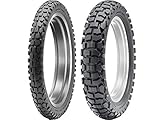
The Dunlop D605 combo set excels for riders seeking versatility across pavement and light off-road terrain. I appreciate the non-directional tread design—honestly, it’s the practical choice when you can’t commit to one surface. The rear tire (120/80-18) carries 584 pounds at 36 PSI maximum pressure, while the front (2.75-21) handles mixed conditions without fussing. At 25 pounds total, this set won’t burden your bike.
The Speed Rating R and Load Index 60 suit moderate adventure riding rather than highway sprints. The 30-day return guarantee means you’re not locked into regret.
Best For: Dual sport riders who need versatile tires for mixed pavement and light off-road terrain without committing to specialized tire configurations.
Pros:
- Non-directional tread design provides practical versatility across multiple surface types and terrain conditions
- Lightweight at 25 pounds total weight won’t add excessive burden to your motorcycle
- Proven reliability and real-world performance
Cons:
- Speed Rating R and Load Index 60 limit suitability to moderate adventure riding rather than high-speed highway performance
- Mismatched front (2.75-21) and rear (120/80-18) tire sizes may require careful selection verification for specific motorcycle compatibility
- Non-directional tread design, while versatile, may not optimize performance compared to directional tires specialized for specific surfaces
Tusk 2Track Adventure Motorcycle Tire Set (Front & Rear)
- Durable rubber compound for confidence inspiring traction and long-lasting wear
- Strategically reinforced and connected knob bases to provide increased handling and stability
- Large tread blocks for consistent on-road handling
- Deep tread gives the tire a tough aggressive look and feel
- Tested in the most brutal conditions
Last update on 2026-06-13 / Affiliate links / Images from Amazon Product Advertising API
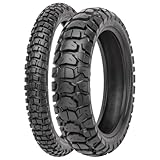
Want aggressive traction without breaking the bank? The Tusk 2Track Adventure set delivers rugged performance through reinforced knob bases and deep tread designed for brutal conditions. I found the 90/90-21 front and 130/80-17 rear configuration handles both asphalt and dirt—though not spectacularly at either extreme.
The 8-ply bias construction provides solid stability; the Q-speed rating caps you at 99 mph (realistic for dual-sport duty). At 639-pound load capacity, you’re adequately equipped for most riders. Directional tread and consistent on-road handling make these workhorses practical if unexciting.
Best For: Dual-sport and adventure riders seeking budget-friendly tires that balance on-road and off-road capability without premium performance at either extreme.
Pros:
- Reinforced knob bases and deep tread provide aggressive traction in rugged, mixed-terrain conditions
- 8-ply bias construction delivers solid stability and a 639-pound load capacity suitable for most riders
- Straightforward value proposition offering legitimate adventure capability at an accessible price point
Cons:
- Directional tread and design compromise performance at extremes—neither excelling on pure asphalt nor aggressive off-road terrain
- Q-speed rating limits top speed to 99 mph, which may feel restrictive for highway-focused dual-sport riding
- Bias construction and basic design lack the refinement and specialized performance of premium adventure tire options
Tusk Dsport Adventure Motorcycle Tire Set (90/90-21 & 130/90-17)
- The Tusk Dsport Adventure tire is D.O.T. compliant for On/Off Road Use
- Aggressive tread pattern offers grip in the toughest off-road conditions
- Rubber compound is designed to not only offer great grip, but to provide long wear on and off the road as well
- Tall knobbies not only offer performance and wear, but give the tire a tough, aggressive look
Last update on 2026-06-13 / Affiliate links / Images from Amazon Product Advertising API
For riders who won’t compromise between serious off-road capability and street legality, Tusk’s Dsport Adventure set delivers a straightforward answer. The 90/90-21 front and 130/90-17 rear combine aggressive directional tread with 6-ply bias construction, giving you 11.5mm and 16mm depths respectively.
D.O.T. compliance means you’re legal everywhere, while the rubber compound handles both pavement and gnarly terrain without throwing fits. At 694 pounds load capacity and R-speed rating, they’re honest performers—not flashy, just reliable workhorses that won’t embarrass you on mixed terrain.
Best For: Dual-sport and adventure riders seeking a versatile tire that balances serious off-road traction with street-legal capability for mixed-terrain riding.
Pros:
- Aggressive directional tread pattern and 6-ply bias construction deliver reliable grip in both off-road and on-road conditions
- D.O.T. compliant design allows legal use on public roads while maintaining off-road performance
- Generous tread depths (11.5mm front, 16mm rear) provide durability and a rugged appearance
Cons:
- R-speed rating (106 mph max) limits highway performance compared to sport or touring-focused alternatives
- Bias construction typically results in less refined handling and comfort on pavement versus modern radial tire designs
- Load capacity of 694 pounds may feel limiting for heavier riders or those carrying significant luggage on longer adventures
Kenda K761 Dual Sport Radial Tire – 120/90R10

- DOT approved
- Unique combination of street and off-road grip provides maximum performance
- Strong and durable nylon four-ply construction
- The advanced compound design gives better stability. cornering traction and braking control
- Tubeless
Last update on 2026-06-13 / Affiliate links / Images from Amazon Product Advertising API
Riders hunting budget-friendly dual sport traction should consider Kenda’s K761—a 120/90R10 radial that won’t require a second mortgage. This four-ply, tubeless workhorse delivers 738 pounds of load capacity with an aggressive directional tread pattern engineered for mixed terrain.
The advanced compound improves cornering grip and braking control across pavement and dirt, while its all-weather construction handles year-round conditions. At just 8.1 pounds and rated for 25 psi maximum pressure, it’s genuinely lightweight. DOT approval and a 30-day return guarantee sweeten the deal.
For small-displacement dual sport bikes demanding versatility without premium pricing, the K761 punches above its modest weight class.
Best For: Riders of small-displacement dual sport motorcycles seeking an affordable, versatile tire that performs on both street and off-road terrain without compromising on quality.
Pros:
- Aggressive directional tread pattern and advanced compound deliver reliable grip and braking control across mixed terrain and all-weather conditions
- Lightweight at 8.1 pounds with a modest 738-pound load capacity, making it ideal for smaller bikes and improved fuel efficiency
- DOT approval and a 30-day return guarantee provide excellent value and peace of mind
Cons:
- Low speed rating (J) and maximum pressure of 25 psi limit highway performance and sustained high-speed riding capability
- 4-ply construction may not provide the durability needed for aggressive off-road use or heavier riders
- Limited load capacity of 738 pounds restricts use for larger riders or those carrying significant cargo
Factors to Consider When Choosing Dual Sport Tires
When I’m shopping for dual sport tires, I’ve learned that nailing the right choice isn’t just about picking the flashiest option—it’s about matching specific performance needs to your bike’s capabilities and your riding style. You’ll want to evaluate tread patterns (which vary dramatically in block density and sipe design), load ratings measured in kilograms at specified pressures, speed ratings from H (130 mph) to V (149 mph), and ply construction that determines sidewall stiffness and puncture resistance. Each of these factors works together; a tire with aggressive tread and robust ply construction might handle rocky terrain beautifully but prove unnecessarily rigid on paved roads, so I’ll break down how to balance them strategically.
Factors to Consider When Choosing Dual Sport Tires
What makes a tire work equally well on cracked pavement and rocky trails? It’s all about understanding the specs that matter. I’d examine tread patterns first—aggressive knobs handle dirt, while balanced designs keep you planted on asphalt. Then there’s construction: 6–8 ply bias tires deliver rugged off-road durability without sacrificing street use, though radials offer better handling finesse.
Don’t overlook profile dimensions either. A 90/90-21 front paired with 130/80-17 rear affects steering response and ground clearance meaningfully. Load index and speed ratings tell you what your bike can safely carry at highway speeds. Finally, confirm DOT compliance—you’ll want legal year-round use.
These factors aren’t independent; they’re interconnected choices defining your tire’s real-world performance envelope.
Tread Pattern and Design
The tread pattern you choose separates a tire that merely survives both surfaces from one that genuinely excels on them, and I’ve found this single element often matters more than riders initially expect. Directional patterns lock in forward grip across pavement and dirt, while tall knobs (typically 8-12mm) carve through mud without clogging.
Here’s where compromise enters: aggressive designs sacrifice some cornering finesse on asphalt for serious off-road bite. I’ve noticed reinforced knob bases prevent squirm during mixed-surface riding, and deep tread blocks maintain stability when terrain shifts unexpectedly.
The pattern you select determines wear rates across seasons too. Non-directional designs offer flexibility; directional ones demand specific mounting. Your riding blend, highway versus trail percentage, should dictate this choice entirely.
Load Capacity Requirements
Matching your tire’s load capacity to your bike-and-rider combination isn’t glamorous, but I’ve seen it tank otherwise solid tire choices when riders overlook it. You need to calculate your total weight—yourself, gear, passenger if applicable—then verify the tire’s load index supports that sum. A load index of 65, for example, handles roughly 992 pounds per tire in dual setups.
Here’s where it gets tricky: radial tires distribute weight more consistently at highway speeds, while bias-ply options behave differently off-road. I’d recommend checking your manufacturer’s specs alongside maximum tire pressure; running underinflated heavy-duty tires compromises handling and accelerates wear. Oversizing load capacity rarely hurts, though heavier-rated tires may slightly reduce comfort and efficiency.
Speed Rating Specifications
Once you’ve nailed down your load capacity, speed rating becomes your next checkpoint. Honestly, it’s where I see riders make careless assumptions. Your tire’s speed rating (think R for 106 mph or Q for 104 mph) must match or exceed your typical riding speeds; this isn’t negotiable for safety.
Here’s the catch: aggressive tread patterns and taller sidewalls, those off-road essentials, actually reduce a tire’s speed rating because they increase flex and lateral movement. That’s why most dual-sport tires cap out around Q or S ratings rather than exceeding them.
Match your bike’s capabilities and your riding habits to the rating. Underestimating speed requirements compromises handling stability at highway speeds, while overshooting ratings wastes money on unnecessary performance you’ll never use.
Ply Construction and Durability
How much punishment can your tire actually absorb before it surrenders to a sharp rock or a poorly timed pothole? I’ll tell you: it depends on ply count. I typically recommend 8-ply to 10-ply configurations for dual-sport tires because they balance abrasion resistance with reasonable weight and flexibility.
Bias-ply construction dominates off-road-oriented designs, offering robust sidewall protection that radials simply can’t match on aggressive terrain. Higher-ply tires deliver greater puncture resistance and durability, though they sacrifice some ride comfort. The real magic happens when ply depth combines with knobby tread patterns, that’s where you get wear resistance across mixed conditions. I’ve found this sweet spot matters more than chasing extra plies that just add unnecessary weight without proportional durability gains.
Seasonal Performance Capabilities
What separates a tire that barely survives winter from one that genuinely thrives across all seasons? The answer lies in compound engineering and tread design.
I’ve found that aggressive knob patterns, those deeper, pointier edges, excel in mud and loose surfaces when conditions turn wet, while softer compounds maintain grip whether you’re riding through summer heat or cooler shoulder months. Directional tread patterns and radial construction handle water evacuation more effectively than their bias counterparts, preventing hydroplaning during downpours.
Here’s the reality: manufacturers engineer these compounds to perform across temperature ranges, not just optimize for one season. Check your tire’s recommended pressure range, it typically accounts for seasonal adjustments that maximize both traction and wear. That’s where year-round capability actually happens.
On-Road Versus Off-Road Balance
Choosing between pavement prowess and dirt-shredding capability means understanding that you’re not actually choosing between them: you’re negotiating how much of each you’re willing to sacrifice. I’ve found that tire sizing dramatically shifts this balance, a 90/90-21 front paired with 130/90-17 rear handles dirt differently than symmetric setups.
On-road performance demands closely spaced knobs and rigid carcasses for precise steering, while off-road grip requires tall, aggressive treads with deeper depths for loose surfaces. Bias-ply construction excels in extreme terrain but sacrifices highway handling; radial designs optimize hot-weather pavement performance instead.
Your load index and speed rating ultimately determine stability across both environments. The real question isn’t which wins, it’s whether you’re riding pavement primarily with dirt detours or vice versa.